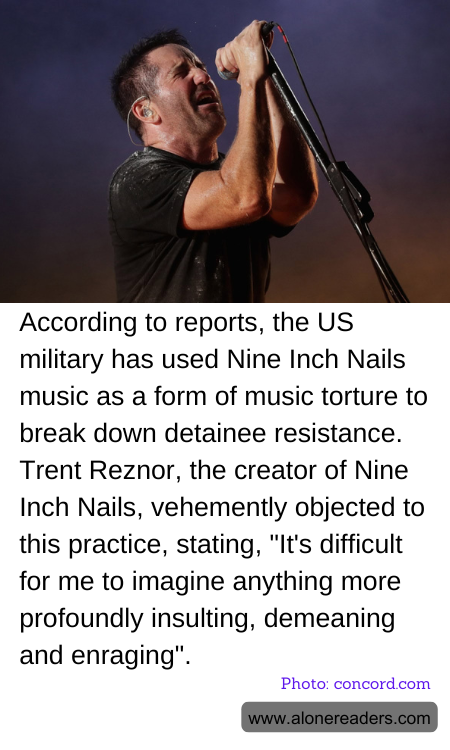
In recent years, reports have surfaced that the US military has employed music as a tool for psychological operations, specifically using the intense and industrial sounds of Nine Inch Nails to break down detainee resistance. This practice, often referred to as "music torture," involves playing loud music for extended periods to disorient and distress detainees. The revelation that Nine Inch Nails' music was part of this controversial technique has sparked significant debate and criticism, particularly from the band's creator, Trent Reznor.
Trent Reznor, known for his innovative and often dark musical compositions, has expressed his vehement opposition to the use of his music in such a manner. In a statement, Reznor described the practice as "profoundly insulting, demeaning and enraging." For an artist whose work often explores themes of alienation and emotional turmoil, the idea that his music could be used to inflict psychological distress on others is deeply troubling. Reznor's objection highlights a broader ethical dilemma regarding the use of art and music in contexts that contradict the creator's intentions.
The use of music as a form of torture raises important questions about the intersection of art, ethics, and human rights. Music is a powerful medium that can evoke a wide range of emotions, from joy and nostalgia to fear and anxiety. When used inappropriately, it can become a tool for coercion and manipulation, stripping it of its intended purpose as a form of expression and connection. The reports of Nine Inch Nails' music being used in this way underscore the need for a broader conversation about the ethical implications of using art in military and interrogation settings.
While the US military has defended its interrogation techniques as necessary for national security, the use of music torture has been widely criticized by human rights organizations and legal experts. They argue that such practices violate international laws and conventions against torture and inhumane treatment. The backlash from artists like Reznor further amplifies the call for transparency and accountability in how music and other forms of art are utilized in military operations.
As the debate continues, it serves as a reminder of the power of music and the responsibility that comes with it. Artists like Trent Reznor create music to express their innermost thoughts and emotions, not to be weaponized against others. The controversy surrounding the use of Nine Inch Nails' music in military settings highlights the need for ongoing dialogue about the ethical use of art and the importance of respecting the intentions of its creators.
