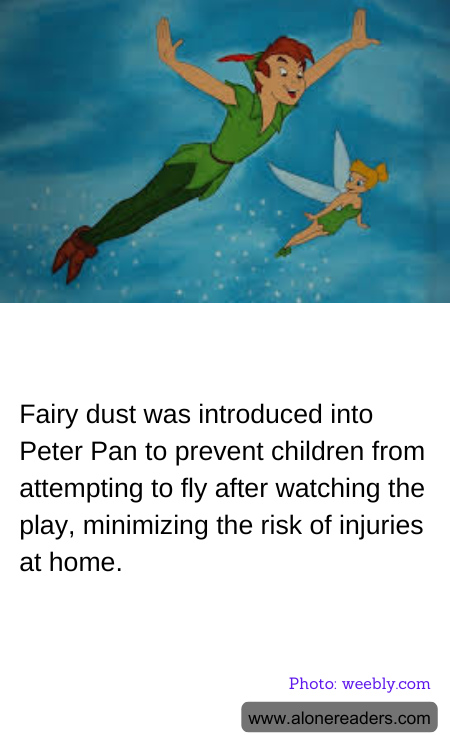
The enchanting world of Peter Pan, created by J.M. Barrie, has captivated audiences for generations with its whimsical adventures and the timeless allure of never growing up. One of the most iconic elements of this story is the magical fairy dust that allows Peter and his friends to soar through the skies of Neverland. However, the introduction of fairy dust into the narrative was not just a creative flourish; it served a practical purpose rooted in safety concerns.
In the early 1900s, when Peter Pan was first performed on stage, the sight of children flying was a breathtaking spectacle. The play's magical realism was so convincing that it sparked a wave of youthful enthusiasm, with children across the United Kingdom and beyond dreaming of taking flight themselves. This enthusiasm, however, came with unintended consequences. Reports began to surface of children attempting to fly from their beds or furniture, inspired by the play's depiction of flight. These attempts, while imaginative, posed significant risks of injury.
To address this growing concern, J.M. Barrie made a thoughtful addition to his story: the necessity of fairy dust for flight. By introducing this magical element, Barrie cleverly communicated to his young audience that flying was not simply a matter of will or belief, but required a special ingredient that was beyond their reach. This narrative adjustment served as a gentle deterrent, reminding children that the wonders of Neverland were confined to the realm of imagination and stagecraft.
The inclusion of fairy dust not only enhanced the magical quality of the story but also underscored a responsible approach to storytelling. It highlighted the importance of considering the impact of fiction on impressionable minds and the responsibility of creators to ensure that their works do not inadvertently encourage dangerous behavior. Barrie's decision reflects a deep understanding of his audience and a commitment to their well-being, ensuring that the magic of Peter Pan could be enjoyed safely.
Today, the concept of fairy dust remains a beloved part of the Peter Pan mythos, symbolizing the blend of imagination and safety. It serves as a reminder that while stories have the power to inspire and transport us to fantastical worlds, they also carry the responsibility of guiding us safely back to reality. As audiences continue to be enchanted by Peter Pan's adventures, the legacy of fairy dust endures, a testament to the thoughtful creativity of J.M. Barrie and his enduring concern for the safety and joy of his young fans.
