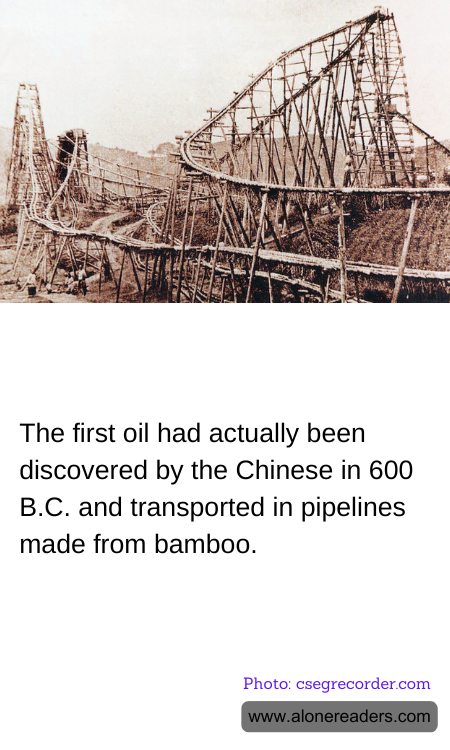
Long before the modern oil industry took shape, the ancient Chinese had already tapped into the earth's natural resources in a way that was both innovative and ahead of its time. Around 600 B.C., the Chinese discovered oil, a resource that would eventually become the lifeblood of industrialization and modern economies. This early discovery marked the beginning of humanity's long-standing relationship with oil, a relationship that has evolved dramatically over the centuries.
The Chinese were not only pioneers in discovering oil but also in developing methods to transport it efficiently. They ingeniously used bamboo, a material abundant in their region, to construct pipelines. These bamboo pipelines were used to transport oil from its source to where it was needed, showcasing an early understanding of the importance of infrastructure in resource management. This method of transportation was not only practical but also environmentally friendly, as bamboo is a sustainable and renewable resource.
The use of bamboo pipelines is a testament to the ingenuity and resourcefulness of ancient Chinese civilization. Bamboo, known for its strength and flexibility, was an ideal material for creating pipelines that could withstand the pressures of transporting oil. The Chinese would cut the bamboo into sections, hollow them out, and then connect them to form a continuous pipeline. This system allowed them to move oil over considerable distances, a remarkable feat for the time.
This early use of oil was primarily for lighting and heating, providing a glimpse into how ancient societies utilized natural resources to improve their quality of life. The Chinese would burn the oil in lamps, which offered a more reliable and longer-lasting source of light compared to other methods available at the time. This innovation not only enhanced daily living but also laid the groundwork for future advancements in energy use.
The discovery and transportation of oil by the Chinese in 600 B.C. highlight a significant chapter in the history of human innovation. It serves as a reminder of how ancient civilizations were able to harness the natural world to meet their needs, using the resources and technology available to them. This early chapter in the story of oil is a fascinating example of human ingenuity and the timeless quest to harness the earth's resources for the betterment of society.
As we reflect on this ancient achievement, it is important to recognize the continuity of human innovation and the ways in which past discoveries have shaped the present. The bamboo pipelines of ancient China may seem rudimentary by today's standards, but they represent a critical step in the evolution of energy technology. This historical perspective not only enriches our understanding of the past but also inspires future generations to continue exploring and innovating in the field of energy.
