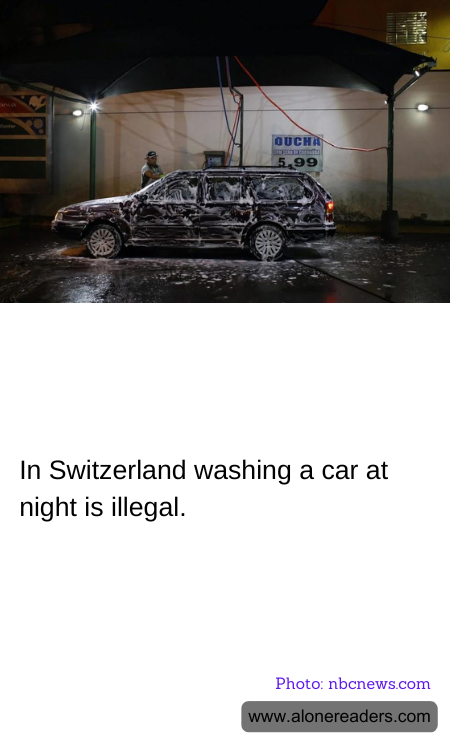
Switzerland, a country renowned for its stunning landscapes, efficient public services, and high quality of life, is also known for its meticulous attention to rules and regulations. Among the many laws that govern daily life in Switzerland, one that often surprises visitors and even some residents is the prohibition against washing cars at night. This regulation, while seemingly peculiar, is rooted in the Swiss commitment to environmental protection and community well-being.
The prohibition on nighttime car washing is part of a broader set of environmental regulations aimed at preserving the pristine nature of Switzerland's environment. The country places a high value on maintaining its natural beauty, and this extends to how residents are allowed to wash their vehicles. Washing a car at night, particularly in residential areas, can lead to water runoff that may contain detergents and other pollutants. These substances can seep into the soil and potentially contaminate local water supplies. By restricting car washing to daylight hours, the authorities aim to minimize the environmental impact and ensure that any potential pollutants are more easily managed and treated.
Moreover, the regulation is also designed to maintain peace and quiet in residential neighborhoods. Switzerland is known for its emphasis on community harmony and respect for others' living spaces. Activities that generate noise, such as car washing, are generally discouraged during nighttime hours to prevent disturbances. This reflects a broader cultural norm in Switzerland, where quiet hours are strictly observed, and residents are expected to be considerate of their neighbors.
In addition to environmental and social considerations, the regulation also underscores the Swiss dedication to order and efficiency. By setting specific times for activities like car washing, the authorities can better manage public resources and services. For instance, water usage can be monitored more effectively, and any necessary maintenance or cleaning of public spaces can be scheduled without disruption.
While the rule might seem unusual to outsiders, it is a testament to Switzerland's holistic approach to governance, where even the smallest details are considered in the pursuit of a balanced and sustainable society. For those living in or visiting Switzerland, understanding and respecting such regulations is part of embracing the local culture and contributing to the community's well-being.
In conclusion, the prohibition against washing cars at night in Switzerland is more than just a quirky law; it is a reflection of the country's deep-seated values of environmental stewardship, community respect, and orderly living. By adhering to these regulations, residents and visitors alike help preserve the natural beauty and tranquility that make Switzerland such a unique and desirable place to live and visit.
