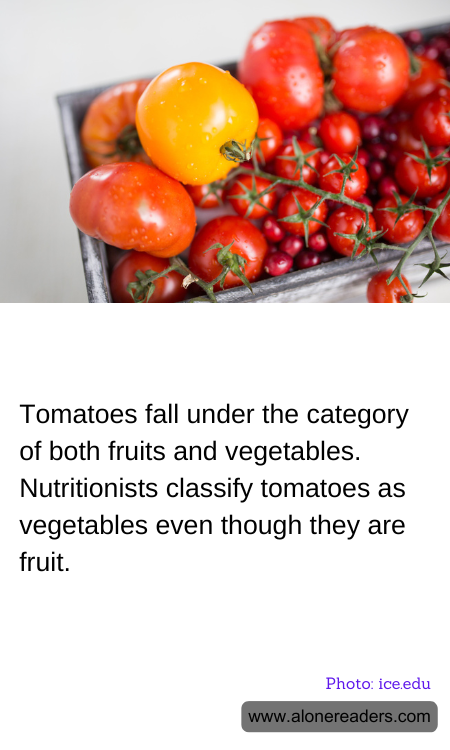
Tomatoes are a staple in kitchens around the world, celebrated for their versatility and vibrant flavor. However, they also hold a unique position in the culinary and botanical worlds, straddling the line between fruit and vegetable. This dual classification often leads to confusion, but it is rooted in both scientific and cultural perspectives.
Botanically speaking, tomatoes are fruits. This classification is based on the fact that they develop from the ovary of a flower and contain seeds, which is the defining characteristic of fruits. In this sense, tomatoes share the same category as apples, berries, and cucumbers. This botanical definition is straightforward and based on the plant's reproductive structure.
However, when it comes to culinary use, tomatoes are often treated as vegetables. This is largely due to their savory flavor profile, which aligns more closely with vegetables than the sweetness typically associated with fruits. In the kitchen, tomatoes are commonly used in salads, sauces, and savory dishes, which reinforces their vegetable-like identity. This culinary classification is practical and based on taste and usage rather than scientific criteria.
Nutritionists also tend to classify tomatoes as vegetables. This classification is not just about taste but also about nutritional content and dietary guidelines. Tomatoes are rich in vitamins, minerals, and antioxidants, such as vitamin C, potassium, and lycopene, which are often associated with vegetables. They are low in sugar compared to many fruits, which aligns them more closely with vegetables in terms of dietary recommendations. This perspective helps guide people in making balanced dietary choices, emphasizing the health benefits of consuming a variety of vegetables.
The dual identity of tomatoes was famously highlighted in the 1893 U.S. Supreme Court case Nix v. Hedden, where the court ruled that tomatoes should be classified as vegetables for tariff purposes. This decision was based on the common culinary use of tomatoes rather than their botanical classification. It underscores how cultural and economic factors can influence the way we categorize food.
In conclusion, the classification of tomatoes as both fruits and vegetables is a fascinating example of how scientific definitions and cultural practices can intersect. While botanically a fruit, tomatoes are treated as vegetables in the culinary world and by nutritionists due to their flavor and nutritional profile. This dual identity enriches our understanding of food and highlights the diverse ways in which we interact with the natural world. Whether you consider them a fruit or a vegetable, tomatoes remain a beloved and essential part of our diets, offering both flavor and nutrition in abundance.
