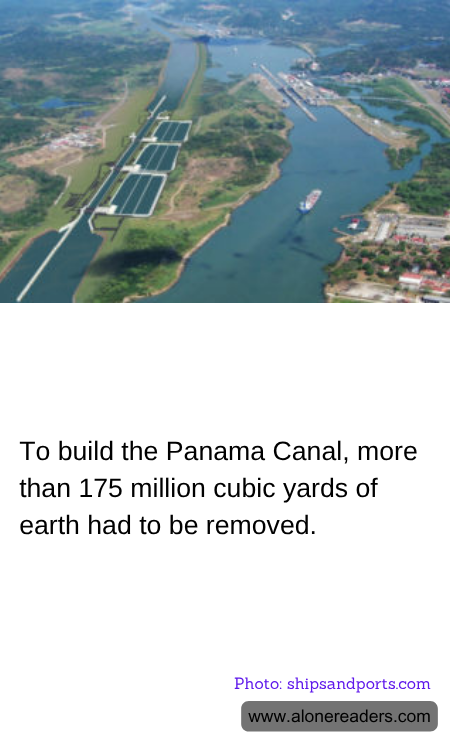
The construction of the Panama Canal stands as one of the most monumental engineering feats of the 20th century. This ambitious project, which connects the Atlantic and Pacific Oceans, required the removal of more than 175 million cubic yards of earth. This massive undertaking was not just a testament to human ingenuity and perseverance but also a pivotal moment in global trade and transportation.
The idea of a canal across the Isthmus of Panama dates back to the early explorers of the New World, who recognized the strategic importance of such a passage. However, it wasn't until the late 19th and early 20th centuries that the dream began to take shape. The French initially attempted to construct the canal under the leadership of Ferdinand de Lesseps, the engineer behind the Suez Canal. Unfortunately, the project was plagued by financial difficulties, engineering challenges, and devastating outbreaks of malaria and yellow fever, which claimed the lives of thousands of workers.
In 1904, the United States took over the project, determined to overcome the obstacles that had thwarted the French efforts. Under the leadership of President Theodore Roosevelt, the U.S. embarked on a renewed construction effort. One of the most significant challenges was the removal of the vast quantities of earth and rock to create a navigable waterway. The task was daunting, requiring innovative engineering solutions and the mobilization of a massive workforce.
The excavation of the Gaillard Cut, a nine-mile stretch through the Continental Divide, was particularly challenging. This section alone required the removal of approximately 100 million cubic yards of earth. Engineers employed steam shovels, dynamite, and an extensive railway system to transport the excavated material. The scale of the operation was unprecedented, with thousands of workers laboring in harsh conditions to achieve the goal.
The successful completion of the Panama Canal in 1914 revolutionized global trade by drastically reducing the travel distance for ships between the east and west coasts of the Americas. It allowed for faster and more efficient movement of goods, contributing significantly to the economic growth of the 20th century. The canal also underscored the importance of international cooperation and technological advancement in overcoming seemingly insurmountable challenges.
Today, the Panama Canal remains a vital artery of global commerce, handling a significant portion of the world's maritime traffic. Its construction is a testament to human determination and the ability to transform ambitious visions into reality. The removal of over 175 million cubic yards of earth was not just a feat of engineering but a symbol of progress and the enduring impact of human endeavor on the world stage.
