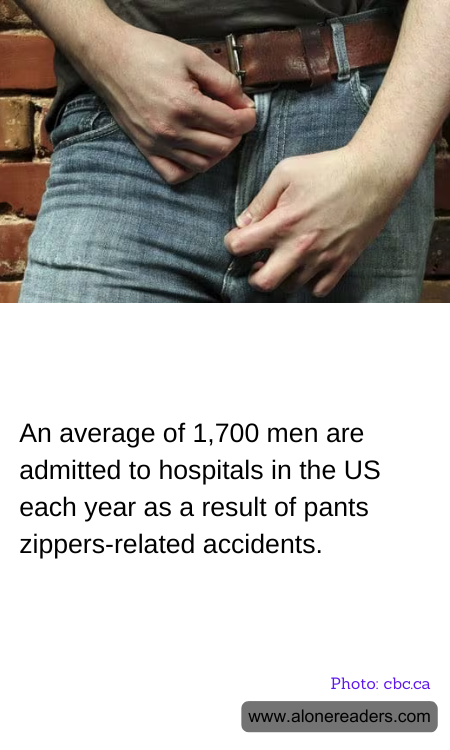
In the realm of unusual statistics, one might be surprised to learn that an average of 1,700 men in the United States find themselves in hospital emergency rooms each year due to accidents involving pants zippers. This seemingly trivial mishap is more common than one might expect, highlighting a peculiar intersection of fashion and safety that often goes unnoticed.
The zipper, a ubiquitous feature in modern clothing, was invented over a century ago and has since become an essential component of pants, jackets, and bags. Despite its convenience, the zipper can pose a risk if not handled with care. The accidents typically occur when the skin gets caught in the zipper mechanism, leading to painful injuries that sometimes require medical attention. While these incidents are often minor, they can cause significant discomfort and embarrassment, prompting a visit to the hospital for proper treatment.
The demographic most affected by these accidents tends to be men, primarily due to the design and usage of men's pants. The front zipper, while practical, can be a source of trouble if not used cautiously. The majority of these injuries are preventable with a bit of mindfulness and care. Ensuring that the zipper is fully open before dressing or undressing can significantly reduce the risk of injury. Additionally, opting for pants with alternative fastening methods, such as buttons or Velcro, can be a safer choice for those particularly prone to such accidents.
This statistic serves as a reminder of the importance of safety in everyday activities. While it may seem trivial compared to other health concerns, the frequency of zipper-related injuries underscores the need for awareness and caution. Manufacturers, too, have a role to play in this regard. By designing clothing with safety in mind, they can help reduce the incidence of such accidents. Innovations in zipper technology, such as smoother mechanisms and protective flaps, can contribute to making clothing safer for consumers.
For parents, educating children about the proper use of zippers can prevent similar accidents from occurring. Teaching kids to be careful when zipping up their pants can instill good habits that last a lifetime. Moreover, ensuring that children's clothing is designed with safety features can further protect young ones from potential injuries.
In conclusion, while zipper-related accidents may seem like a minor issue, they highlight the broader theme of safety in everyday life. By taking simple precautions and encouraging manufacturers to prioritize safety in design, we can reduce the number of these incidents. As with many aspects of life, a little caution can go a long way in preventing unnecessary pain and discomfort.
