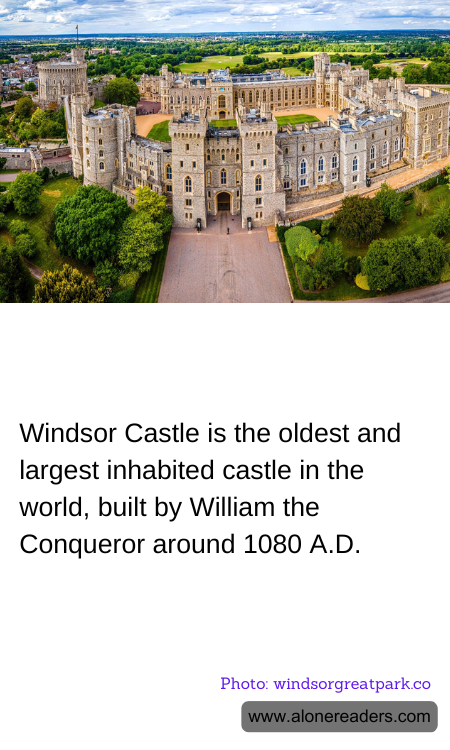
Nestled in the picturesque county of Berkshire, England, Windsor Castle stands as a monumental testament to history, heritage, and architectural grandeur. As the oldest and largest inhabited castle in the world, it has been a symbol of the British monarchy for nearly a millennium. Built by William the Conqueror around 1080 A.D., Windsor Castle has not only withstood the test of time but has also evolved into a living piece of history that continues to capture the imagination of visitors from around the globe.
The origins of Windsor Castle trace back to the aftermath of the Norman Conquest. William the Conqueror, seeking to fortify his newly acquired kingdom, strategically chose the site for its advantageous position overlooking the River Thames. Initially constructed as a motte-and-bailey castle, it was designed to serve both as a defensive stronghold and a royal residence. Over the centuries, the castle underwent numerous expansions and renovations, transforming it into the sprawling complex we see today.
Windsor Castle's architectural evolution reflects the changing tastes and needs of its royal occupants. From the medieval fortifications of the Middle Ages to the elegant Georgian and Victorian additions, each era has left its indelible mark. The castle's iconic Round Tower, soaring high above the surrounding landscape, is perhaps its most recognizable feature. This formidable structure, along with the castle's extensive walls and towers, speaks to its original purpose as a fortress.
Beyond its architectural splendor, Windsor Castle is a living institution, serving as one of the official residences of the British monarch. It has been the preferred weekend retreat for many of England's kings and queens, offering a respite from the bustle of London. The castle's State Apartments, lavishly decorated with priceless works of art and historical artifacts, provide a glimpse into the opulent lifestyle of the monarchy. The St. George's Chapel, a masterpiece of Gothic architecture, is not only a place of worship but also the final resting place of numerous monarchs, including Henry VIII and the late Queen Elizabeth II.
Windsor Castle's significance extends beyond its royal connections. It has been the backdrop for countless historical events, from the signing of the Magna Carta in nearby Runnymede to the more recent royal weddings that have captured the world's attention. Its enduring presence serves as a reminder of the continuity and resilience of the British monarchy.
Today, Windsor Castle welcomes visitors from all corners of the globe, offering them a chance to step back in time and experience the grandeur of a bygone era. Whether exploring the richly adorned State Apartments, attending a service at St. George's Chapel, or simply strolling through the castle's beautifully manicured gardens, visitors are sure to be captivated by the castle's timeless allure.
In conclusion, Windsor Castle is more than just a historical monument; it is a living, breathing embodiment of British history and culture. Its walls have witnessed the passage of time, the rise and fall of dynasties, and the evolution of a nation. As the oldest and largest inhabited castle in the world, it continues to stand as a symbol of strength, tradition, and enduring legacy.
