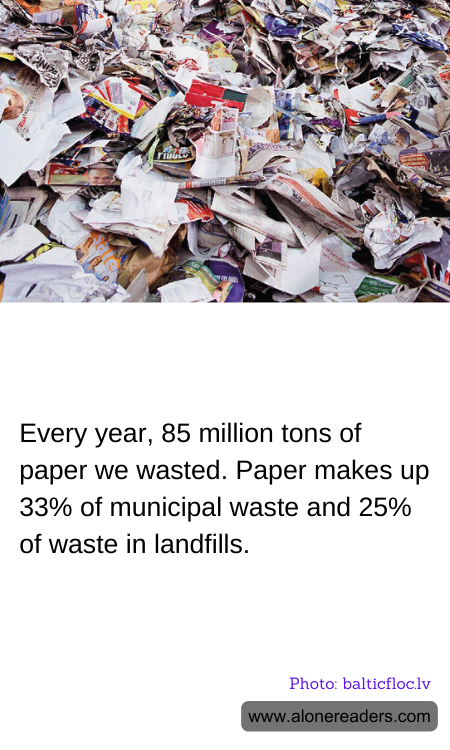
In an era where environmental consciousness is more crucial than ever, the staggering statistic that 85 million tons of paper are wasted annually is a call to action. This waste is not just a number; it represents a significant portion of our municipal waste, accounting for 33% of it, and contributes to 25% of the waste in landfills. The implications of such waste are far-reaching, affecting not only our environment but also our economy and society.
The production and disposal of paper have a profound environmental impact. The process of manufacturing paper is resource-intensive, requiring large amounts of water and energy, and contributing to deforestation. Forests, which are vital for maintaining ecological balance, are being depleted at an alarming rate to meet the demand for paper products. This deforestation leads to a loss of biodiversity and contributes to climate change, as trees play a crucial role in absorbing carbon dioxide from the atmosphere.
Once paper products are used, they often end up in landfills, where they contribute to the growing problem of waste management. In landfills, paper decomposes and releases methane, a potent greenhouse gas that exacerbates global warming. The sheer volume of paper waste also strains waste management systems, leading to increased costs for municipalities and taxpayers.
Reducing paper waste is not only an environmental imperative but also an economic opportunity. By adopting more sustainable practices, businesses and individuals can significantly cut costs. Simple measures such as going digital, using both sides of a sheet of paper, and recycling can make a substantial difference. Recycling paper not only reduces the need for raw materials but also saves energy and water, making it a more sustainable option.
Education and awareness are key to tackling the issue of paper waste. Encouraging schools, offices, and households to adopt paper-saving practices can lead to a cultural shift towards sustainability. Governments and organizations can play a pivotal role by implementing policies that promote recycling and the use of recycled products, as well as by investing in technologies that reduce paper consumption.
Ultimately, addressing the problem of paper waste requires a collective effort. By making conscious choices and advocating for sustainable practices, we can reduce the environmental impact of paper waste and move towards a more sustainable future. The challenge is significant, but the potential benefits for our planet and future generations are immense. As individuals, communities, and nations, it is time to turn the page on paper waste and write a new chapter in environmental stewardship.
