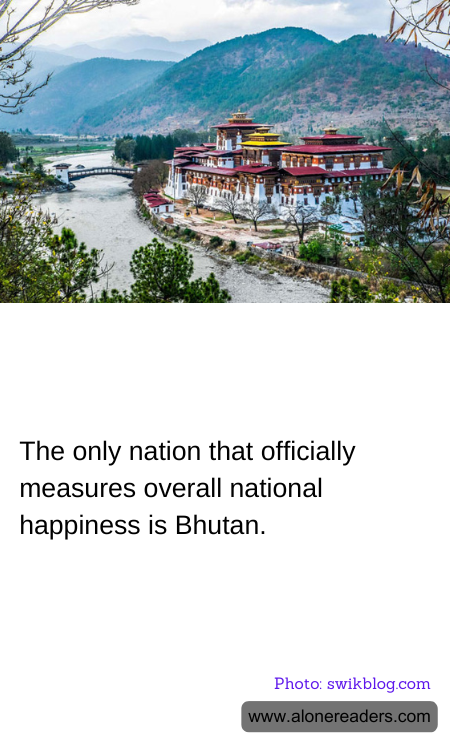
Nestled in the eastern Himalayas, Bhutan stands out not only for its breathtaking landscapes and rich cultural heritage but also for its unique approach to governance and development. Unlike most nations that prioritize economic growth as the primary measure of progress, Bhutan has taken a different path by officially measuring the happiness of its citizens. This small kingdom has become a global pioneer in promoting the concept of Gross National Happiness (GNH), a philosophy that places the well-being of its people at the forefront of national policy.
The concept of Gross National Happiness was introduced by the fourth King of Bhutan, King Jigme Singye Wangchuck, in the 1970s. He believed that the true measure of a country's success should not be limited to economic indicators like Gross Domestic Product (GDP) but should also encompass the happiness and well-being of its people. This revolutionary idea has since been embedded in Bhutan's national ethos and serves as a guiding principle for its development policies.
GNH is built on four pillars: sustainable and equitable socio-economic development, conservation of the environment, preservation and promotion of culture, and good governance. These pillars are further broken down into nine domains, including psychological well-being, health, education, time use, cultural diversity and resilience, good governance, community vitality, ecological diversity and resilience, and living standards. By focusing on these areas, Bhutan aims to create a balanced and harmonious society where economic progress does not come at the expense of environmental degradation or cultural erosion.
The implementation of GNH is not just theoretical; it is actively measured and integrated into Bhutan's policy-making process. The government conducts regular surveys to assess the happiness levels of its citizens, gathering data on various aspects of their lives. This information is then used to inform policies and initiatives that aim to improve the quality of life for all Bhutanese people. For instance, if survey results indicate a decline in community vitality, the government might invest in programs that strengthen social bonds and community engagement.
Bhutan's commitment to GNH has garnered international attention and admiration. It serves as a reminder that economic growth should not be the sole objective of development. Instead, a holistic approach that considers the well-being of individuals and communities can lead to a more sustainable and fulfilling way of life. While Bhutan's model may not be directly applicable to larger, more complex nations, it offers valuable insights into how happiness and well-being can be prioritized in national agendas.
In a world increasingly focused on material wealth and economic indicators, Bhutan's emphasis on happiness and well-being is a refreshing and inspiring perspective. It challenges us to rethink our definitions of progress and success, urging us to consider the broader implications of our development choices. As Bhutan continues to champion Gross National Happiness, it stands as a beacon of hope and a testament to the power of prioritizing human well-being in the pursuit of national prosperity.
