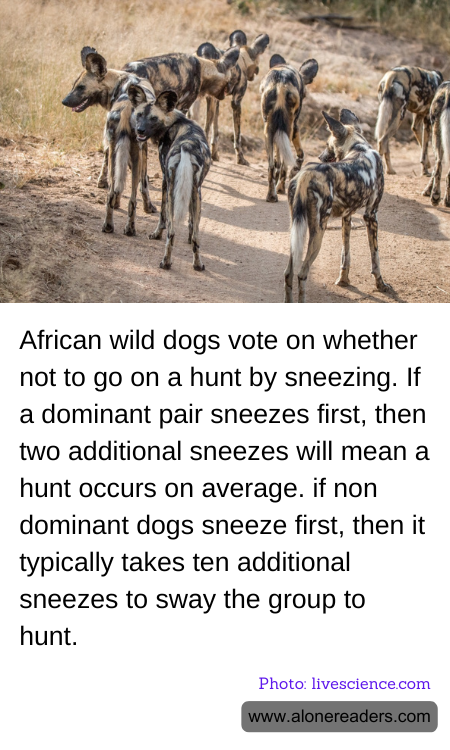
In the vast and diverse ecosystems of Africa, the African wild dog, also known as the painted wolf, exhibits one of the most fascinating and democratic decision-making processes in the animal kingdom. These highly social animals, known for their cooperative hunting strategies and complex social structures, have developed a unique method of communication to decide when to embark on a hunt: sneezing.
Recent studies have revealed that African wild dogs use sneezes as a form of voting system to determine whether the pack should go on a hunt. This intriguing behavior highlights the importance of consensus and social hierarchy within their packs. The process begins when members of the pack gather and engage in a ritualized greeting ceremony, which often includes a series of sneezes. These sneezes are not merely a physiological response but serve as a form of communication to gauge the readiness and willingness of the group to hunt.
The decision-making process is influenced significantly by the social status of the dogs initiating the sneezes. If a dominant pair, usually the alpha male and female, sneezes first, it sets a strong precedent for the rest of the pack. In such cases, only two additional sneezes from other pack members are typically required to reach a consensus, and the group will proceed with the hunt. This demonstrates the influential role that dominant individuals play in guiding the pack's activities and ensuring that decisions are made efficiently.
Conversely, when non-dominant dogs initiate the sneezing, the threshold for consensus is notably higher. It generally takes around ten additional sneezes from other pack members to sway the group towards a hunt. This higher requirement reflects the need for broader agreement among the pack when the suggestion comes from lower-ranking individuals. It ensures that the decision to hunt is supported by a significant portion of the group, thereby reducing the risk of unsuccessful hunts due to lack of participation or coordination.
This sneezing-based voting system underscores the complex social dynamics and communication skills of African wild dogs. It allows them to make collective decisions that are crucial for their survival, as hunting requires the cooperation and coordination of the entire pack. The ability to reach a consensus through sneezing also highlights the importance of social bonds and mutual respect within the pack, as each member's input is considered in the decision-making process.
The study of African wild dogs and their unique communication methods offers valuable insights into the social structures of animal groups and the evolution of cooperative behaviors. It reminds us of the intricate and often surprising ways in which animals interact with one another and adapt to their environments. As we continue to learn more about these remarkable creatures, we gain a deeper appreciation for the complexity and diversity of life on our planet.
