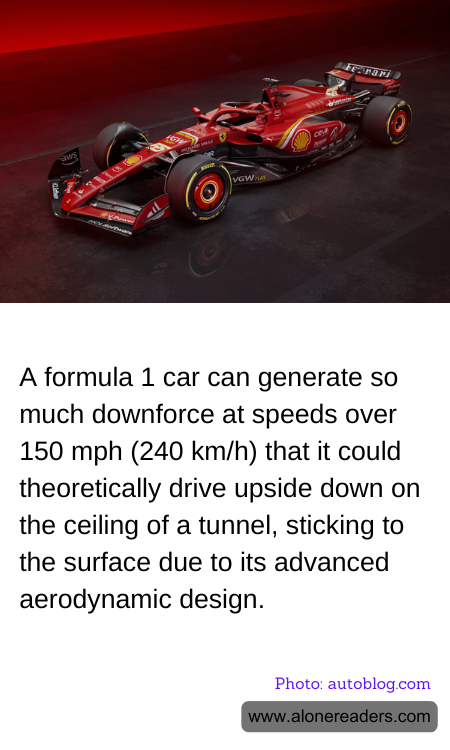
In the high-octane world of Formula 1 racing, speed and precision are paramount. These sleek machines are not only marvels of engineering but also exemplars of aerodynamic prowess. One of the most fascinating aspects of a Formula 1 car is its ability to generate immense downforce, a force that presses the car onto the track, enhancing grip and stability. At speeds exceeding 150 mph (240 km/h), this downforce becomes so significant that, theoretically, a Formula 1 car could drive upside down on the ceiling of a tunnel, adhering to the surface as if defying gravity.
The concept of a car driving upside down may sound like science fiction, but it is rooted in the principles of aerodynamics. Formula 1 cars are designed with intricate aerodynamic features, including wings, diffusers, and bargeboards, all meticulously crafted to manipulate airflow. The primary goal is to create downforce, which is the vertical force pushing the car down onto the track. This force is crucial for maintaining traction, especially when navigating sharp corners at high speeds.
The wings of a Formula 1 car function similarly to those of an airplane, but in reverse. While airplane wings are designed to generate lift, allowing the aircraft to soar into the sky, the wings on a Formula 1 car are inverted to produce downforce. As air flows over and under these wings, it creates a pressure differential, with higher pressure beneath the wing and lower pressure above it. This difference in pressure pushes the car downward, effectively increasing its weight and grip on the track.
The idea of a car driving upside down relies on the car generating enough downforce to counteract the force of gravity. At speeds over 150 mph, the downforce produced by a Formula 1 car can exceed its own weight, theoretically allowing it to stick to the ceiling of a tunnel. This remarkable feat is a testament to the advanced engineering and design that goes into these racing machines.
While the notion of an upside-down drive remains a theoretical exercise, it underscores the incredible capabilities of Formula 1 cars and the importance of aerodynamics in motorsport. Engineers continuously push the boundaries of design to optimize performance, ensuring that these cars remain at the pinnacle of speed and technology.
For fans and enthusiasts, the idea of a car defying gravity is a thrilling reminder of the innovation and excitement that Formula 1 brings to the world of racing. It highlights the blend of science, technology, and sheer human ingenuity that makes Formula 1 not just a sport, but a spectacle of engineering excellence.
