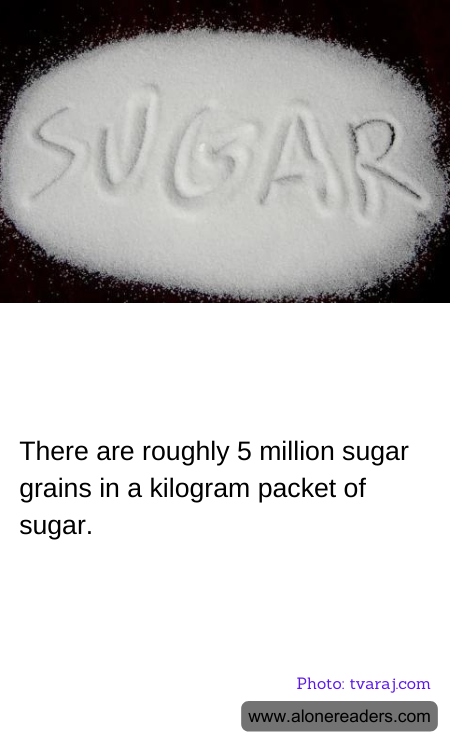
Imagine holding a kilogram packet of sugar in your hand. It’s a common household item, often taken for granted, yet within that seemingly simple package lies a fascinating world of tiny crystals. Astonishingly, there are roughly 5 million sugar grains in a single kilogram of sugar. This remarkable fact invites us to explore the intricate details of something so ubiquitous in our daily lives.
Sugar, primarily composed of sucrose, is a carbohydrate that plays a vital role in our diet, providing a quick source of energy. The sugar grains we use in our kitchens are typically derived from sugarcane or sugar beet. Each grain is a small, crystalline structure, meticulously formed through a process of crystallization. The size of these grains can vary slightly depending on the type of sugar and its intended use, but they are generally quite small, allowing millions to fit into a single kilogram.
The sheer number of grains in a kilogram of sugar highlights the precision involved in its production. During the refining process, sugarcane or sugar beet juice is extracted, purified, and then crystallized. This crystallization process is carefully controlled to ensure uniformity in the size of the sugar grains. The result is a product that not only sweetens our food but also dissolves evenly, enhancing the texture and flavor of countless recipes.
Understanding the number of sugar grains in a kilogram also offers a glimpse into the scale of agricultural and industrial efforts required to produce sugar. The journey from field to table involves planting, harvesting, processing, and packaging, all of which are essential to delivering this staple to consumers worldwide. Each step in this journey is a testament to human ingenuity and the ability to harness natural resources efficiently.
For those curious about the science behind sugar, the structure of each grain is a marvel in itself. Sugar crystals are formed from a lattice of sucrose molecules, which align in a specific pattern to create the solid form we recognize. This crystalline structure is what gives sugar its characteristic crunch and ability to dissolve in liquids, making it an essential ingredient in both cooking and baking.
The next time you reach for a packet of sugar, take a moment to appreciate the complexity and scale of what you hold. Those 5 million grains are not just a measure of quantity but a reflection of the intricate processes that bring sweetness to our lives. Whether sprinkled on cereal, stirred into coffee, or baked into a cake, sugar is a small but significant part of our culinary experience, connecting us to a global network of agriculture and industry.
