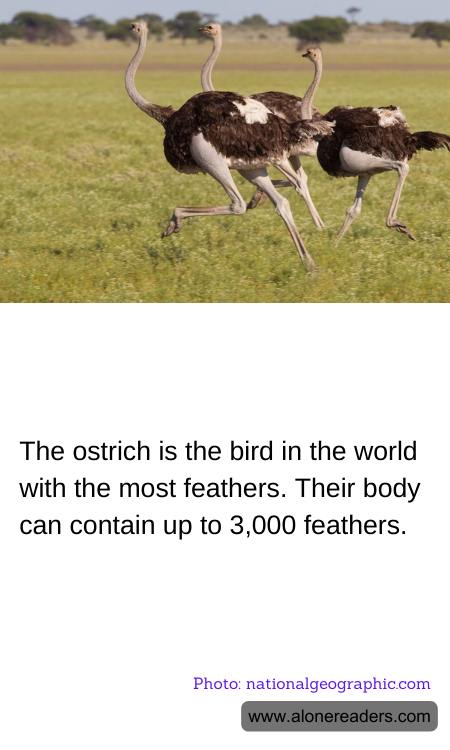
The ostrich, a fascinating creature of the avian world, holds the remarkable distinction of being the bird with the most feathers. With a body that can boast up to 3,000 feathers, the ostrich is not only the largest bird on the planet but also one of the most uniquely adapted to its environment. These feathers, while not used for flight, serve a variety of essential purposes that contribute to the ostrich's survival in the wild.
Unlike most birds, ostriches are flightless, a characteristic that has led to their evolution in other remarkable ways. Their feathers are soft and fluffy, providing excellent insulation against the extreme temperatures of their native habitats in Africa. During the scorching heat of the day, these feathers help to keep the ostrich cool, while at night, they offer warmth against the chill. This natural adaptation is crucial for survival in the often harsh and unpredictable climates of the savannah and desert regions.
In addition to temperature regulation, the ostrich's feathers play a significant role in social and mating behaviors. During courtship displays, male ostriches use their striking black and white plumage to attract females. The males perform elaborate dances, spreading their wings and fluffing their feathers to showcase their vitality and strength. This visual display is a critical component of their mating rituals, highlighting the importance of feathers beyond mere physical protection.
Ostriches also use their feathers for camouflage and protection. The coloration of their plumage allows them to blend seamlessly into their surroundings, providing a natural defense against predators. When threatened, ostriches can lie flat on the ground, their feathers blending with the earth tones of their environment, making them less visible to potential threats. This ability to remain hidden is vital, as ostriches, despite their size, are prey to a variety of predators, including lions and hyenas.
The sheer number of feathers on an ostrich is a testament to the bird's evolutionary journey. Each feather is meticulously maintained, with ostriches spending considerable time preening to ensure their plumage remains in optimal condition. This grooming behavior is not only essential for maintaining the health and functionality of their feathers but also plays a role in social bonding among ostriches.
In conclusion, the ostrich's impressive feather count is more than just a numerical fact; it is a reflection of the bird's adaptability and resilience. These feathers, while not enabling flight, are integral to the ostrich's survival strategy, providing insulation, aiding in social interactions, and offering protection. As the largest bird on Earth, the ostrich continues to captivate and intrigue, its feathers a symbol of its unique place in the natural world.
