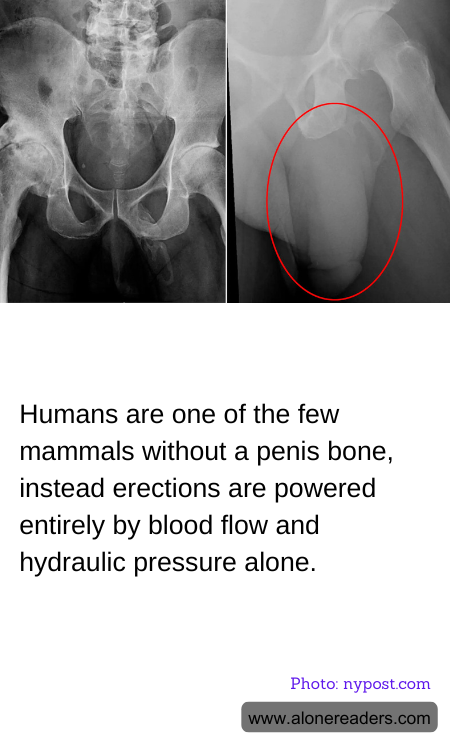
In the vast tapestry of the animal kingdom, humans stand out in many ways, one of which is the absence of a penis bone, or baculum. This anatomical feature is present in many mammals, including our closest relatives, the primates, as well as other species like bears, dogs, and even some rodents. The baculum serves as a support structure, aiding in copulation by providing rigidity. However, humans, along with a few other species such as cetaceans (whales and dolphins) and some bats, rely solely on blood flow and hydraulic pressure to achieve an erection.
The human erection is a marvel of biological engineering. It is a complex process that begins with sexual arousal, which triggers the release of nitric oxide in the body. This chemical messenger relaxes the smooth muscles of the penile arteries, allowing them to dilate. As the arteries expand, they fill with blood, increasing the internal pressure and causing the penis to enlarge and become rigid. This hydraulic mechanism is efficient and allows for a rapid response to stimuli, which is advantageous for reproductive success.
The evolutionary reasons behind the absence of a baculum in humans are still a subject of scientific inquiry and debate. Some researchers suggest that the loss of the penis bone in humans may be linked to changes in mating systems and reproductive strategies. In species where prolonged copulation is necessary for successful reproduction, a baculum provides the necessary support. However, in humans, where pair bonding and monogamous relationships are more common, the need for such a structure may have diminished over time.
Another theory posits that the absence of a baculum in humans is related to the evolution of bipedalism. As our ancestors began to walk upright, changes in pelvic structure and locomotion may have influenced the anatomy of the reproductive organs. The reliance on blood flow for erections could be an adaptation that aligns with these broader evolutionary changes.
Despite the absence of a baculum, the human reproductive system is highly effective. The reliance on blood flow allows for a degree of control and flexibility that a rigid bone might not provide. This system also reflects the intricate balance of human physiology, where multiple systems work in harmony to achieve a common goal.
In conclusion, the lack of a penis bone in humans is a fascinating example of how evolution shapes the anatomy and reproductive strategies of different species. While the exact reasons for this absence remain a topic of research, it highlights the unique path of human evolution and the remarkable adaptability of our species. Understanding these differences not only enriches our knowledge of human biology but also underscores the diversity and complexity of life on Earth.
