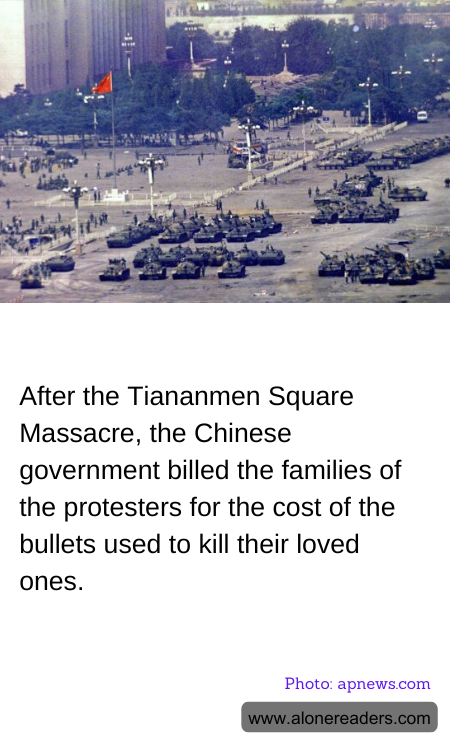
In the annals of modern history, few events have left as indelible a mark as the Tiananmen Square Massacre of 1989. This tragic incident, where thousands of pro-democracy protesters were met with brutal military force, remains a poignant symbol of the struggle for freedom and the harsh realities of authoritarian governance. Yet, beyond the immediate violence and loss of life, a lesser-known but equally shocking aftermath unfolded: the Chinese government's decision to bill the families of the deceased protesters for the cost of the bullets used to kill their loved ones.
This practice, which seems almost inconceivable to those accustomed to different political systems, underscores the extent to which the Chinese government sought to suppress dissent and control the narrative surrounding the events of June 4, 1989. By charging families for the bullets, the government not only inflicted further emotional pain on those already grieving but also sent a chilling message to the populace about the consequences of opposing the state.
The decision to bill families for the bullets was part of a broader strategy to deter future protests and reinforce the power of the state. It served as a stark reminder of the lengths to which the government would go to maintain control and silence opposition. This policy was not just about financial reimbursement; it was a symbolic act meant to instill fear and demonstrate the state's dominance over individual lives.
For the families affected, receiving such a bill was a devastating blow. It compounded their grief with a sense of injustice and helplessness, as they were forced to confront the harsh reality that their loved ones' lives were reduced to a mere financial transaction. This act of billing also highlighted the impersonal and bureaucratic nature of the regime, which prioritized its own authority over the basic human dignity of its citizens.
Internationally, the revelation of this practice drew widespread condemnation and further tarnished China's global image. It served as a stark illustration of the regime's disregard for human rights and its willingness to employ extreme measures to maintain its grip on power. The international community, while largely powerless to intervene directly, expressed outrage and called for accountability and reform.
In the years since the massacre, the Chinese government has worked tirelessly to erase the memory of Tiananmen from public consciousness, censoring discussions and punishing those who dare to commemorate the event. However, the memory of the massacre and the subsequent billing of families remain etched in the collective memory of those who witnessed or learned about these events. They serve as a somber reminder of the cost of authoritarianism and the enduring struggle for freedom and justice.
As the world continues to grapple with issues of human rights and state power, the lessons of Tiananmen Square and its aftermath remain relevant. They underscore the importance of vigilance, the need to hold governments accountable, and the enduring human spirit that seeks freedom and dignity in the face of oppression.
