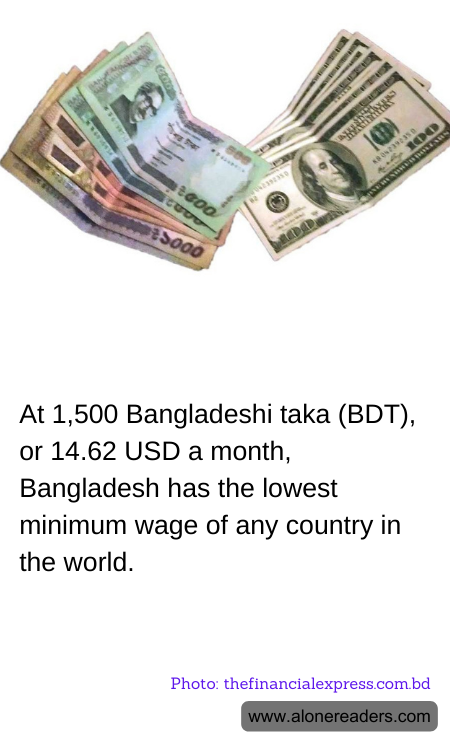
In the global landscape of labor economics, Bangladesh stands out for having the lowest minimum wage, set at 1,500 Bangladeshi taka (BDT) per month, which is approximately 14.62 USD. This figure highlights the stark reality faced by many workers in the country, particularly those in the garment industry, which forms the backbone of Bangladesh's economy. The low minimum wage is a reflection of the country's economic challenges and its efforts to remain competitive in the global market by offering low-cost labor.
The garment industry in Bangladesh is one of the largest in the world, second only to China. It employs millions of workers, most of whom are women. These workers are the driving force behind the country's economic growth, yet they earn wages that are barely sufficient to meet basic living expenses. The low minimum wage is often justified by the need to attract foreign investment and maintain the competitiveness of Bangladesh's exports. However, this comes at a significant human cost, as workers struggle to afford necessities such as food, housing, and healthcare.
Efforts to increase the minimum wage have been met with resistance from factory owners and industry leaders who argue that higher wages could lead to job losses and reduced competitiveness. However, labor rights activists and international organizations have long advocated for a fairer wage system that ensures a decent standard of living for workers. They argue that a sustainable wage increase would not only improve the quality of life for millions of workers but also lead to increased productivity and economic stability in the long run.
The government of Bangladesh has occasionally revised the minimum wage, but these increments have often been criticized as insufficient. The challenge lies in balancing the needs of workers with the economic realities of a developing nation. While the government and industry leaders focus on maintaining economic growth, it is crucial to ensure that this growth translates into tangible benefits for the workforce that fuels it.
International pressure and consumer awareness are gradually pushing for change. Global brands sourcing from Bangladesh are increasingly being held accountable for the working conditions in their supply chains. Consumers are becoming more conscious of the origins of their clothing and the conditions under which they are produced. This shift in consumer behavior is encouraging brands to advocate for better wages and working conditions in the factories they source from.
Ultimately, addressing the issue of low minimum wages in Bangladesh requires a multifaceted approach. It involves government policy changes, industry reforms, and international cooperation. By working together, stakeholders can create a more equitable system that respects the rights and dignity of workers while ensuring the continued growth and competitiveness of Bangladesh's economy. The journey towards fair wages is complex, but it is a necessary step towards a more just and sustainable future for all.
