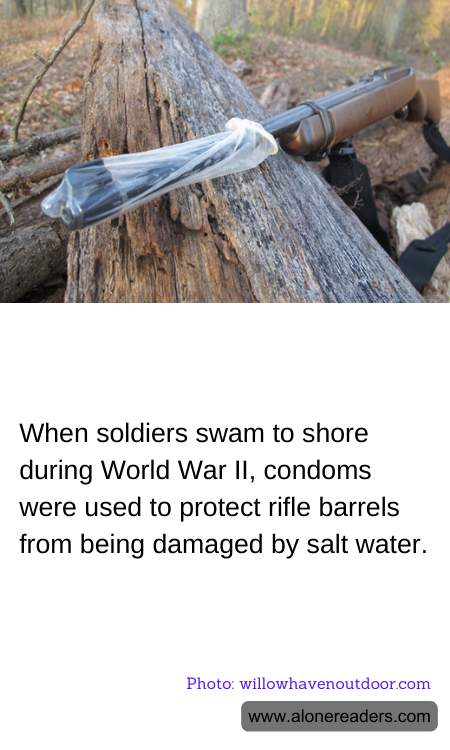
During World War II, innovation and resourcefulness were as crucial to the war effort as bravery and strategy. Among the many inventive solutions devised by soldiers and military engineers was the unexpected use of condoms to protect rifle barrels from the corrosive effects of salt water. This practice highlights the ingenuity of soldiers who had to adapt to the harsh and unpredictable conditions of warfare.
As Allied forces prepared for amphibious assaults, such as the famous D-Day landings on the beaches of Normandy, they faced the challenge of keeping their weapons functional after exposure to the sea. Salt water posed a significant threat to the metal components of rifles, risking rust and corrosion that could render them useless in the heat of battle. Soldiers needed a simple yet effective method to safeguard their firearms during the treacherous swim from landing crafts to shore.
The solution came in the form of an everyday item: the condom. Known for their elasticity and waterproof properties, condoms were repurposed to cover the muzzles of rifles, creating a tight seal that kept salt water out. This ingenious use of condoms ensured that soldiers could maintain the operational readiness of their weapons, a critical factor in the success of their missions. The condoms were easy to carry, quick to apply, and could be discarded once the soldiers reached dry land, making them an ideal choice for this purpose.
This practice is a testament to the adaptability and quick thinking that characterized much of the wartime experience. It also underscores the importance of improvisation in military operations, where the ability to make do with available resources often determined the outcome of engagements. The use of condoms to protect rifle barrels is just one example of how soldiers employed creative solutions to overcome the myriad challenges they faced.
Beyond its practical implications, this story also serves as a reminder of the human element in warfare. It illustrates how soldiers, despite the dire circumstances, found ways to solve problems with the materials at hand. This adaptability not only contributed to their survival but also to the overall success of military operations during World War II.
In the broader context of history, the use of condoms to protect rifles is a small but fascinating footnote that reflects the resourcefulness and resilience of those who served. It is a story that continues to capture the imagination, offering a glimpse into the everyday realities of soldiers and the innovative spirit that helped shape the course of the war.
