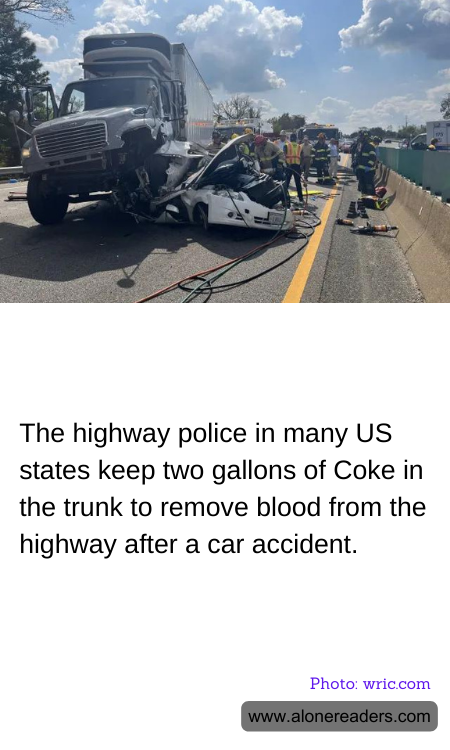
In the aftermath of a car accident, the scene can often be chaotic and distressing. Among the many tasks that highway police officers undertake is the cleanup of the accident site. An interesting and somewhat surprising tool that some officers reportedly use in this process is Coca-Cola. It is said that highway police in many US states keep two gallons of Coke in their trunks to help remove blood from the highway following an accident.
The use of Coca-Cola for cleaning purposes might seem unusual at first glance, but it is based on the beverage's chemical properties. Coke contains phosphoric acid, which is effective at breaking down organic materials, including blood. This makes it a practical, readily available, and cost-effective solution for cleaning up accident scenes. The acidity of Coke helps to dissolve the blood, making it easier to wash away from the asphalt, which can be crucial in restoring the road to a safe and usable condition.
While the idea of using a popular soft drink for such a purpose might raise eyebrows, it underscores the versatility of everyday products. Coca-Cola's cleaning capabilities have been a topic of interest for years, with various anecdotes and experiments highlighting its ability to clean rust, remove stains, and even polish metal. In the context of highway maintenance, its use is a testament to the resourcefulness of law enforcement officers who must often think on their feet and utilize whatever tools are at their disposal to manage the aftermath of accidents efficiently.
However, it is important to note that while Coke can aid in the initial cleanup, it is not a substitute for professional cleaning services that may be required for more thorough decontamination. The primary goal of using Coke is to quickly address visible stains and ensure that the road is safe for drivers as soon as possible. This practice also highlights the broader issue of road safety and the importance of minimizing the impact of accidents on traffic flow and public safety.
In conclusion, the use of Coca-Cola by highway police as a cleaning agent is a fascinating example of how unconventional methods can be employed in emergency situations. It serves as a reminder of the diverse applications of everyday products and the innovative approaches that law enforcement officers take to maintain safety and order on the roads. While it may not be a widely publicized practice, it certainly adds an interesting dimension to the myriad ways in which police officers work to keep our highways safe and clean.
