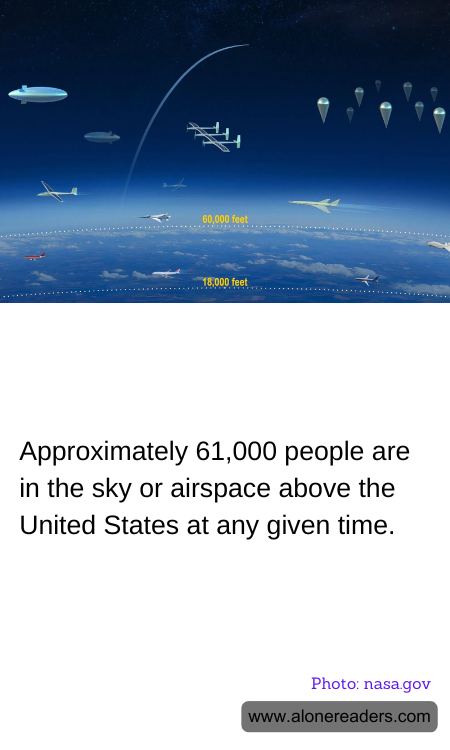
At any given moment, the skies above the United States are bustling with activity, as approximately 61,000 people traverse the airspace. This remarkable statistic highlights the intricate and dynamic nature of modern air travel, a testament to the technological advancements and logistical prowess that make such a feat possible. The constant movement of passengers, crew, and aircraft is a reflection of the interconnected world we live in, where air travel has become an essential part of daily life for millions.
The sheer volume of people in the sky at any given time is supported by a vast network of airports, airlines, and air traffic control systems. The United States is home to some of the busiest airports in the world, such as Hartsfield-Jackson Atlanta International Airport and Los Angeles International Airport, which handle thousands of flights daily. These hubs serve as critical nodes in the global aviation network, facilitating the movement of people and goods across continents. The Federal Aviation Administration (FAA) plays a crucial role in ensuring the safety and efficiency of this complex system, managing over 5,000 aircraft in the airspace at peak times.
Air travel has become more accessible and affordable over the years, contributing to the high number of people in the sky. The democratization of air travel has allowed individuals from various walks of life to explore new destinations, connect with loved ones, and conduct business on a global scale. This accessibility has fostered cultural exchange and economic growth, as people and ideas move more freely than ever before. The aviation industry has also made strides in sustainability, with airlines investing in more fuel-efficient aircraft and exploring alternative fuels to reduce their environmental impact.
Despite the challenges posed by weather conditions, technical issues, and the occasional disruption, the aviation industry has demonstrated remarkable resilience and adaptability. The COVID-19 pandemic, for instance, temporarily grounded many flights and reduced the number of people in the sky. However, the industry has since rebounded, implementing stringent health and safety measures to restore passenger confidence and ensure the continued flow of air traffic.
The presence of 61,000 people in the sky at any given time is a testament to human ingenuity and the relentless pursuit of progress. It underscores the importance of collaboration among governments, airlines, and technology providers to maintain a safe and efficient air travel system. As we look to the future, innovations such as electric aircraft, improved air traffic management systems, and enhanced passenger experiences promise to further transform the way we navigate the skies. In the meantime, the bustling airspace above the United States serves as a reminder of our collective ability to connect and explore, transcending geographical boundaries and bringing the world closer together.
