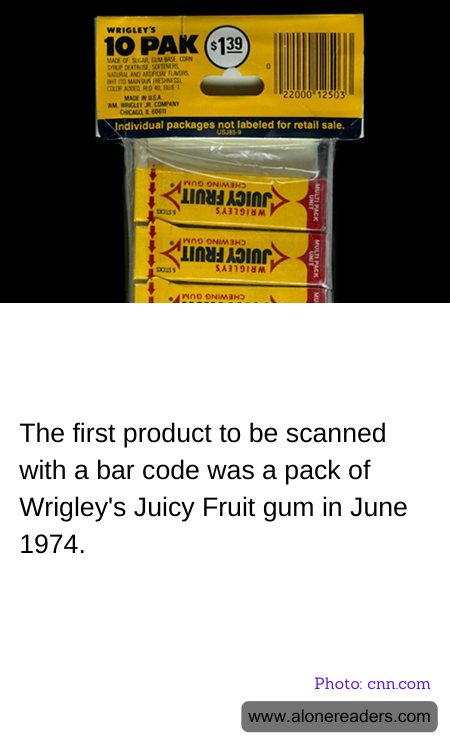
In the annals of retail history, a seemingly mundane event in June 1974 marked the beginning of a technological revolution that would transform the way we shop. On this day, a pack of Wrigley's Juicy Fruit gum became the first product ever to be scanned with a bar code at a supermarket in Troy, Ohio. This momentous occasion signaled the dawn of a new era in retail efficiency and inventory management, setting the stage for the ubiquitous presence of bar codes in our daily lives.
The bar code, a simple yet ingenious invention, was developed to streamline the checkout process and improve inventory tracking. Before its introduction, cashiers manually entered prices into registers, a time-consuming and error-prone task. The development of the Universal Product Code (UPC) system, which includes the bar code, was a collaborative effort involving industry leaders and technology experts. The goal was to create a standardized system that could be universally adopted, thereby enhancing the efficiency of retail operations.
The choice of Wrigley's Juicy Fruit gum as the first product to be scanned was largely coincidental, yet it has since become a symbol of technological advancement in retail. The gum was chosen simply because it was small and easy to handle, making it an ideal candidate for the first test of the new scanning technology. The successful scan of the gum's bar code was a testament to the potential of this new system, which promised to revolutionize the way businesses managed their inventories and processed sales.
Since that historic day, the use of bar codes has expanded far beyond the confines of grocery stores. Today, bar codes are an integral part of various industries, from healthcare and logistics to manufacturing and beyond. They have enabled businesses to track products with precision, reduce errors, and improve customer service. The efficiency gains from bar code technology have also contributed to the globalization of supply chains, allowing products to be tracked and managed across continents with ease.
The legacy of that first scan in 1974 is evident in the seamless shopping experiences we enjoy today. Bar codes have paved the way for the development of more advanced technologies, such as QR codes and RFID tags, which continue to enhance the way we interact with products and services. As we look back on the humble beginnings of bar code technology, it is clear that the simple act of scanning a pack of gum was a pivotal moment in the evolution of modern commerce.
In essence, the first scan of Wrigley's Juicy Fruit gum was more than just a technological milestone; it was a harbinger of the digital age. It demonstrated the power of innovation to transform everyday tasks and laid the groundwork for the sophisticated retail systems we rely on today. As we continue to embrace new technologies, the story of that first bar code scan serves as a reminder of how far we have come and the endless possibilities that lie ahead.
