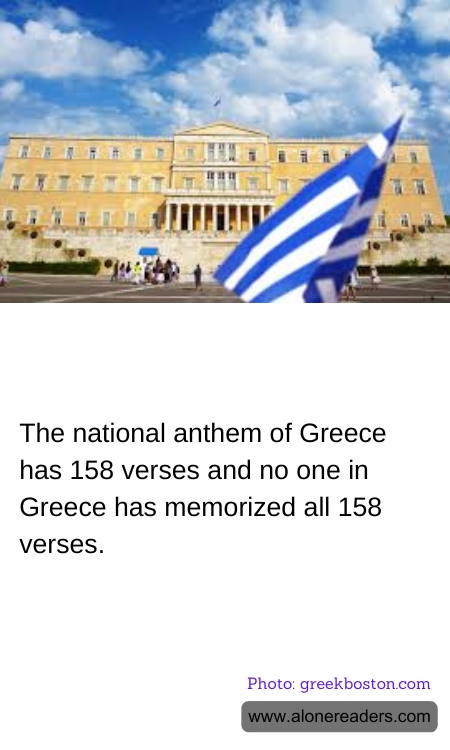
The national anthem of Greece, known as the "Hymn to Liberty" or "Hymn to Freedom," is a remarkable piece of literary and musical history. Composed by Dionysios Solomos in 1823 and set to music by Nikolaos Mantzaros, it stands out not only for its patriotic fervor but also for its extraordinary length. With a staggering 158 verses, it holds the distinction of being the longest national anthem in the world. Despite its length, the anthem is a cherished symbol of Greek identity and pride, though it is rare for anyone to have memorized it in its entirety.
The anthem's origins are deeply rooted in the Greek War of Independence against Ottoman rule. Solomos, inspired by the struggle for freedom, penned the verses as a tribute to the resilience and courage of the Greek people. The poem captures the spirit of liberation and the yearning for national sovereignty, themes that resonate deeply with the Greek populace. However, in practice, only the first two stanzas are typically sung during official ceremonies and public events, which succinctly encapsulate the essence of the anthem's message.
The sheer length of the "Hymn to Liberty" poses a unique challenge. Memorizing all 158 verses is a daunting task, and it is widely acknowledged that no one in Greece has accomplished this feat. This is not due to a lack of reverence for the anthem but rather a reflection of its complexity and the practicalities of everyday life. The anthem's full text is often studied in academic settings, where its historical and literary significance is explored, but it is the first two verses that have become ingrained in the national consciousness.
Despite this, the anthem's full version remains a source of national pride. It serves as a reminder of Greece's rich cultural heritage and the enduring spirit of its people. The anthem's length is a testament to the depth of emotion and historical context that Solomos sought to convey. It stands as a literary masterpiece, celebrated for its poetic beauty and its role in galvanizing a nation during a pivotal moment in history.
In contemporary Greece, the national anthem continues to be a powerful symbol of unity and identity. It is performed at national holidays, sporting events, and other significant occasions, where its stirring melody and poignant lyrics evoke a sense of belonging and patriotism. While the full 158 verses may remain largely unmemorized, the anthem's impact is undiminished, serving as a timeless tribute to the enduring quest for freedom and the indomitable spirit of the Greek people.
