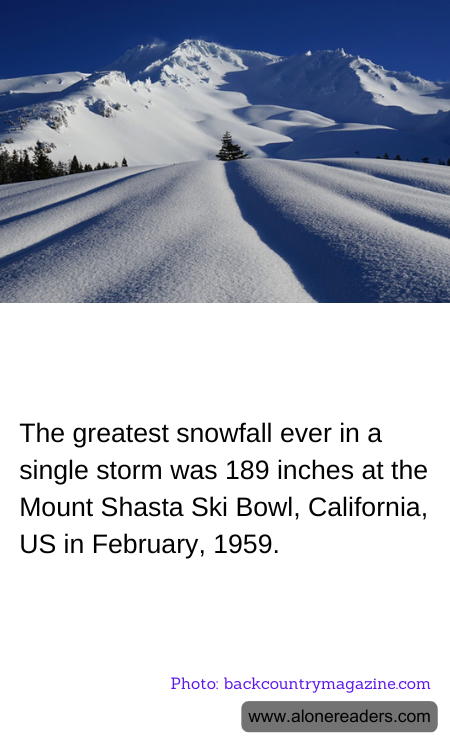
In the annals of meteorological history, February 1959 stands out as a remarkable month for snowfall records. During this time, the Mount Shasta Ski Bowl in California, United States, experienced what is considered the greatest snowfall ever recorded in a single storm. An astounding 189 inches of snow blanketed the area, creating a winter wonderland that has yet to be surpassed in terms of sheer volume from a single storm.
Mount Shasta, a majestic peak in the Cascade Range, is no stranger to heavy snowfall. Its elevation and geographical location make it a prime target for winter storms that sweep in from the Pacific Ocean. However, the storm of February 1959 was extraordinary even by Mount Shasta's standards. Over the course of several days, the storm unleashed a relentless barrage of snow, transforming the landscape into a scene of pristine white beauty. The sheer magnitude of the snowfall was both awe-inspiring and challenging for those living and working in the area.
The impact of such a massive snowfall was felt far beyond the ski bowl itself. Roads became impassable, and communities were temporarily isolated as they struggled to dig out from under the immense drifts. For the Mount Shasta Ski Bowl, the storm presented both opportunities and challenges. On one hand, the abundant snow created ideal conditions for skiing and other winter sports, drawing enthusiasts eager to experience the exceptional powder. On the other hand, the sheer volume of snow required significant effort to manage, with crews working tirelessly to clear paths and ensure safety for visitors.
This historic snowfall event is a testament to the power and unpredictability of nature. It serves as a reminder of the incredible forces at play in our environment and the ways in which they can shape our experiences and communities. For those who witnessed the storm or have heard tales of its magnitude, it remains a legendary event, a benchmark against which other snowfalls are measured.
Today, the record set at Mount Shasta in 1959 continues to capture the imagination of weather enthusiasts and serves as a point of pride for the region. It highlights the unique climatic conditions that can occur in mountainous areas and underscores the importance of preparedness and resilience in the face of extreme weather events. As climate patterns continue to evolve, the story of Mount Shasta's record snowfall remains a fascinating chapter in the ongoing dialogue about our planet's dynamic and ever-changing climate.
