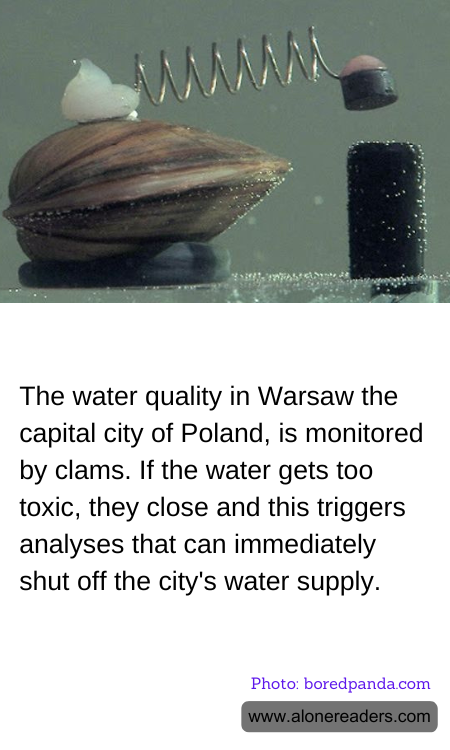
In the heart of Europe, Warsaw, the bustling capital city of Poland, employs an innovative and natural method to ensure the safety of its water supply. While technological advancements have provided numerous ways to monitor water quality, Warsaw has turned to an unexpected ally: clams. These unassuming mollusks play a crucial role in safeguarding the city's water, offering a unique blend of nature and technology to protect its residents.
Clams, known for their sensitivity to environmental changes, serve as natural bioindicators. In Warsaw, they are strategically placed in the city's water supply system to monitor the quality of the water. The clams are kept in a controlled environment where their behavior is closely observed. Under normal conditions, clams remain open as they filter water for food. However, if the water becomes contaminated with toxins, the clams instinctively close their shells to protect themselves. This natural response is harnessed by the city's water monitoring system.
When the clams close their shells, it triggers an alert that initiates a series of analyses to determine the cause and extent of the contamination. This immediate response is crucial, as it allows for rapid intervention to prevent potentially harmful water from reaching the public. If necessary, the system can automatically shut off the city's water supply, ensuring that residents are not exposed to unsafe water. This proactive approach not only highlights the importance of maintaining water quality but also showcases the innovative use of natural resources in modern urban management.
The use of clams in Warsaw's water monitoring system is a testament to the city's commitment to environmental stewardship and public health. It reflects a broader trend of integrating natural processes with technological solutions to address contemporary challenges. By leveraging the clams' natural behavior, Warsaw has created a reliable and efficient system that underscores the importance of biodiversity in urban settings.
This method of water quality monitoring is not only effective but also sustainable. It reduces the reliance on chemical testing and complex machinery, offering a cost-effective solution that aligns with eco-friendly practices. Moreover, it serves as an educational tool, raising awareness about the delicate balance of ecosystems and the role of various species in maintaining environmental health.
Warsaw's innovative use of clams as water quality monitors is a remarkable example of how nature can be harnessed to solve modern problems. It highlights the potential for creative solutions that blend traditional knowledge with contemporary needs. As cities around the world grapple with the challenges of ensuring safe and clean water, Warsaw's approach offers a model that is both practical and inspiring, reminding us of the profound connections between humans and the natural world.
