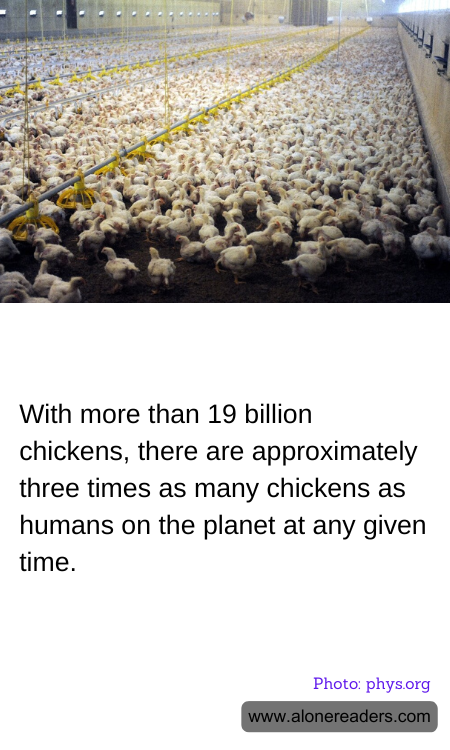
Chickens are an integral part of human life, providing a primary source of protein through their meat and eggs. With a staggering population of over 19 billion, chickens outnumber humans by approximately three to one. This remarkable statistic highlights the significant role chickens play in global agriculture and food supply chains.
The sheer number of chickens is a testament to their adaptability and the efficiency of modern poultry farming. Chickens are raised in various environments, from small backyard coops to large industrial farms, each contributing to the vast global population. Their ability to thrive in diverse climates and conditions makes them a versatile and reliable food source. Moreover, chickens have a relatively short growth cycle, allowing for rapid production and replenishment, which is crucial in meeting the demands of a growing human population.
The prevalence of chickens also underscores the advancements in agricultural technology and breeding practices. Selective breeding has led to chickens that grow faster and produce more eggs than their ancestors, optimizing them for human consumption. This has been essential in ensuring food security, particularly in regions where other forms of livestock may not be as viable due to environmental or economic constraints.
However, the massive scale of chicken farming is not without its challenges. Concerns about animal welfare, environmental impact, and sustainability have become increasingly prominent. Intensive farming practices can lead to overcrowding, which raises ethical questions about the quality of life for these animals. Additionally, the environmental footprint of large-scale chicken farming, including waste management and resource consumption, is a growing concern for sustainability advocates.
Efforts are being made to address these issues through improved farming practices and innovations in sustainable agriculture. Free-range and organic farming methods are gaining popularity, offering more humane and environmentally friendly alternatives. These practices aim to balance the need for high production with ethical and ecological considerations, ensuring that the chicken population can continue to support human needs without compromising the planet's health.
In conclusion, the fact that there are more than 19 billion chickens on Earth at any given time is a reflection of their importance to human society. As we continue to rely on chickens for sustenance, it is crucial to consider the implications of their vast numbers on animal welfare and the environment. By embracing sustainable practices and technological advancements, we can ensure that chickens remain a vital and responsible part of our global food system.
