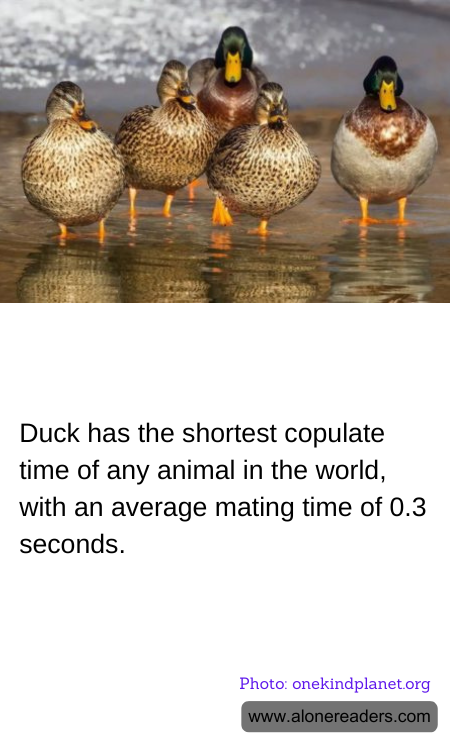
In the fascinating world of animal behavior, ducks hold a unique record that might surprise many: they have the shortest copulation time of any animal, averaging a mere 0.3 seconds. This brief mating ritual is a remarkable adaptation that has evolved over time, reflecting the complex interplay of biology and survival strategies in the animal kingdom.
Ducks, particularly mallards, are known for their vibrant plumage and distinctive quacking, but their mating habits are equally intriguing. The brevity of their copulation is a direct result of evolutionary pressures. In the wild, speed can be a crucial factor for survival. Quick mating reduces the risk of predation, as ducks are often vulnerable to predators during this intimate act. By minimizing the time spent in this vulnerable position, ducks increase their chances of survival and successful reproduction.
The anatomy of ducks also plays a significant role in this rapid mating process. Male ducks, or drakes, possess a unique reproductive organ that is coiled and can extend rapidly, allowing for swift copulation. This adaptation is not only about speed but also about ensuring reproductive success in a competitive environment. In many duck species, females have evolved complex reproductive tracts with multiple twists and turns, which can make successful fertilization a challenge. The rapid copulation helps drakes overcome these obstacles, ensuring that their genetic material has a better chance of reaching the eggs.
While the 0.3-second mating time might seem astonishingly brief, it is a testament to the efficiency and adaptability of ducks. This quick encounter is part of a larger courtship ritual that involves elaborate displays and behaviors. Drakes often engage in intricate dances, vocalizations, and displays of their colorful feathers to attract females. These courtship behaviors are crucial for mate selection, as they allow females to choose the most suitable partners based on their displays of health and vitality.
The study of duck mating habits offers valuable insights into the broader themes of evolution and adaptation. It highlights how species can develop unique strategies to cope with environmental pressures and reproductive challenges. For ducks, the combination of rapid copulation and elaborate courtship rituals ensures that they can thrive in diverse habitats around the world.
In conclusion, the duck's record for the shortest copulation time is more than just a curious fact; it is a window into the intricate and often surprising ways in which animals adapt to their environments. By understanding these behaviors, we gain a deeper appreciation for the complexity and diversity of life on Earth. Ducks, with their swift and efficient mating strategies, remind us of the remarkable adaptability of nature and the endless wonders it holds.
