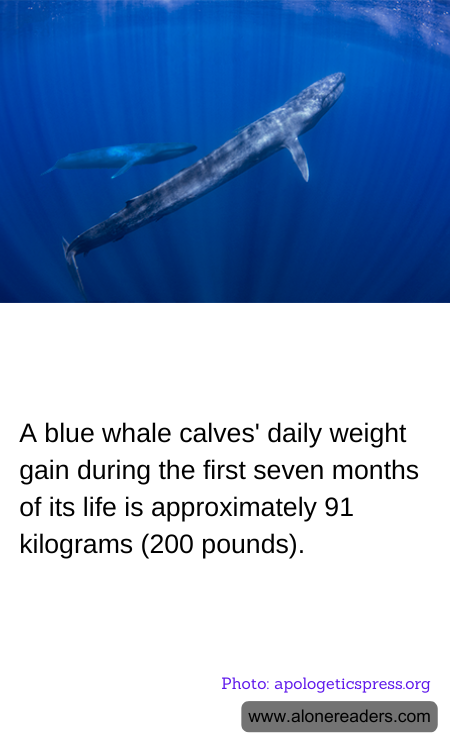
The blue whale, the largest animal known to have ever existed, is a marvel of the natural world. Among its many astounding features is the rapid growth rate of its calves. During the first seven months of life, a blue whale calf gains weight at an astonishing rate of approximately 91 kilograms, or 200 pounds, per day. This remarkable growth is a testament to the evolutionary adaptations that have allowed these gentle giants to thrive in the vast expanses of the ocean.
At birth, a blue whale calf already weighs about 2,700 kilograms (nearly 6,000 pounds) and measures around 7 meters (23 feet) in length. This initial size is crucial for survival in the ocean's challenging environment. The calf's rapid weight gain is fueled by its mother's nutrient-rich milk, which contains high levels of fat and protein. Blue whale milk is about 35-50% fat, providing the necessary energy for the calf's rapid growth and development. The calf nurses frequently, consuming hundreds of liters of milk each day, which supports its extraordinary weight gain.
This rapid growth phase is essential for the calf's survival. As the calf grows, it develops the strength and size needed to navigate the ocean's vast distances and evade potential predators. The increase in size also helps the calf maintain its body temperature in the cold ocean waters. The rapid weight gain during these early months is a critical period that sets the foundation for the calf's future as one of the ocean's most formidable creatures.
The blue whale's growth strategy is a fascinating example of nature's ingenuity. By growing quickly, the calf can transition from the vulnerable early stages of life to a more secure position in the marine ecosystem. This growth is not just about size; it also involves the development of vital organs and systems that will support the whale throughout its life. The calf's heart, lungs, and other organs must grow and adapt to support its increasing size and the demands of life in the ocean.
The blue whale's life cycle, particularly the early growth of its calves, highlights the delicate balance of marine ecosystems. It underscores the importance of preserving these environments to ensure that blue whales and other marine species can continue to thrive. As the largest animals on Earth, blue whales play a crucial role in the health of the ocean, and their survival is intricately linked to the well-being of the marine environment.
In conclusion, the blue whale calf's daily weight gain of approximately 91 kilograms during its first seven months is a remarkable feat of nature. This rapid growth is essential for the calf's survival and is supported by the rich, fatty milk provided by its mother. As these majestic creatures continue to navigate the challenges of the modern world, understanding and protecting their life cycle is more important than ever. By appreciating the wonders of the blue whale's growth, we can better appreciate the intricate beauty and complexity of life in our oceans.
