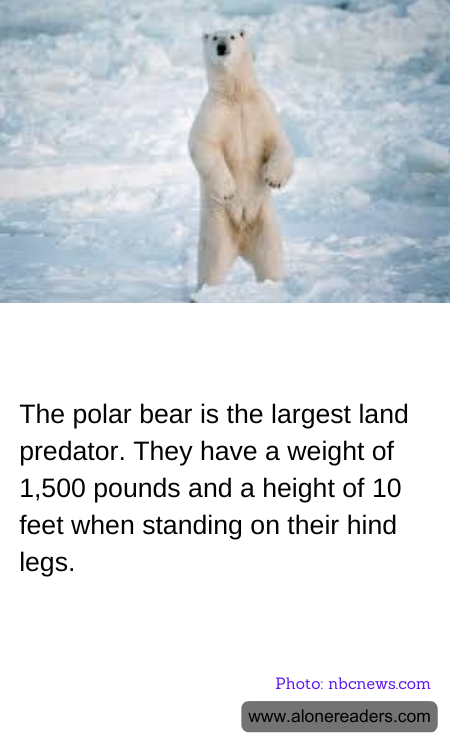
The polar bear, a majestic and awe-inspiring creature, holds the title of the largest land predator on Earth. These magnificent animals are a symbol of the Arctic wilderness, embodying both the beauty and the harshness of their icy habitat. With their impressive size, polar bears can weigh up to 1,500 pounds and reach a towering height of 10 feet when standing on their hind legs. This formidable stature not only makes them an imposing presence but also a fascinating subject of study for scientists and wildlife enthusiasts alike.
Polar bears are uniquely adapted to thrive in the extreme conditions of the Arctic. Their thick, white fur provides excellent insulation against the cold and helps them blend seamlessly into their snowy surroundings. Beneath their fur, a layer of blubber further insulates them and serves as an energy reserve during times when food is scarce. These adaptations are crucial for survival in an environment where temperatures can plummet to bone-chilling lows and food sources are often spread over vast distances.
Despite their size and strength, polar bears are vulnerable to the effects of climate change. As global temperatures rise, the sea ice that polar bears depend on for hunting seals—their primary food source—is melting at an alarming rate. This loss of habitat not only threatens their ability to find food but also impacts their breeding and migration patterns. Conservation efforts are underway to address these challenges, but the future of polar bears remains uncertain as they continue to face the consequences of a warming planet.
Polar bears are solitary creatures, with each individual requiring a large territory to find sufficient food. They are excellent swimmers, capable of covering long distances in search of prey. Their powerful limbs and partially webbed front paws make them adept at navigating the icy waters of the Arctic Ocean. This ability to swim for miles is essential, especially as the ice continues to recede, forcing them to travel further in search of sustenance.
The polar bear's role as a top predator is vital for maintaining the balance of the Arctic ecosystem. By preying on seals, they help regulate seal populations, which in turn affects the entire food web. This intricate balance highlights the importance of preserving polar bear populations, not just for their own sake, but for the health of the entire Arctic environment.
For many people, the polar bear is a symbol of the wild and untamed beauty of the Arctic. Their presence in popular culture, from children's books to documentaries, has captured the imagination of people worldwide. As we learn more about these incredible animals, it becomes increasingly clear that their survival is intricately linked to the health of our planet. Protecting polar bears and their habitat is not just an environmental issue but a call to action for the preservation of the natural world for future generations.
