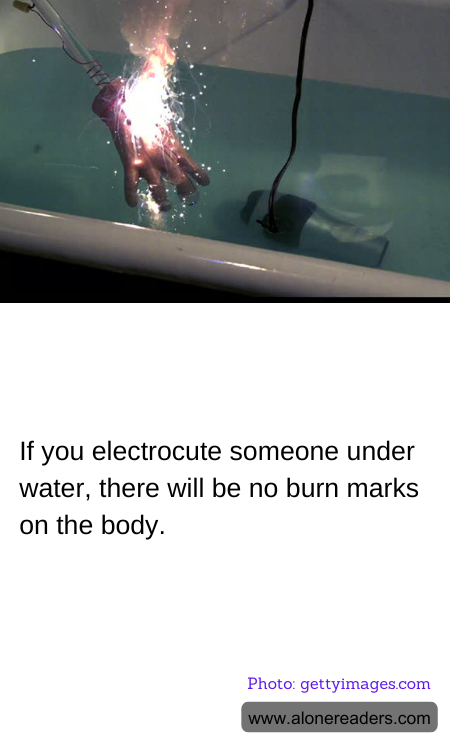
The interaction between electricity and water is a topic that often piques curiosity, especially when considering the effects of electrocution under water. A common belief is that if someone is electrocuted underwater, there will be no burn marks on the body. This notion, while intriguing, requires a closer examination of the principles of electricity and its behavior in aquatic environments.
Electricity, by its nature, seeks the path of least resistance. Water, particularly when it contains impurities such as salts and minerals, is a good conductor of electricity. When an electrical current is introduced into water, it disperses rapidly, spreading out in all directions. This dispersion can reduce the concentration of the current at any single point, potentially minimizing localized damage such as burn marks. However, this does not mean that the effects of electrocution are any less severe or dangerous.
The absence of visible burn marks does not imply that the body has not suffered significant harm. The human body is also a conductor of electricity, and when submerged, the electrical current can pass through it. The internal damage caused by electricity can be extensive, affecting vital organs such as the heart and brain. The heart is particularly vulnerable, as electrical currents can disrupt its normal rhythm, leading to cardiac arrest. This internal damage is often more critical than any external burns that might be visible in other circumstances.
Moreover, the lack of burn marks can complicate the diagnosis and treatment of electrocution victims. Medical professionals rely on visible signs to assess the severity of electrical injuries, and the absence of burns might lead to an underestimation of the internal damage. This underscores the importance of immediate medical attention for anyone suspected of being electrocuted, regardless of the presence or absence of external injuries.
In addition to the physiological effects, the legal and forensic implications of underwater electrocution are significant. In cases where foul play is suspected, the absence of burn marks might complicate investigations. Forensic experts must rely on other indicators, such as the presence of electrical devices in the vicinity and the condition of the water, to determine the cause of death or injury.
In conclusion, while electrocution underwater might not leave visible burn marks, the dangers remain profound and potentially fatal. The internal damage caused by electrical currents can be life-threatening, necessitating immediate medical intervention. Understanding the behavior of electricity in water is crucial for both safety and forensic investigations, highlighting the need for caution and respect for the power of electricity in all environments.
