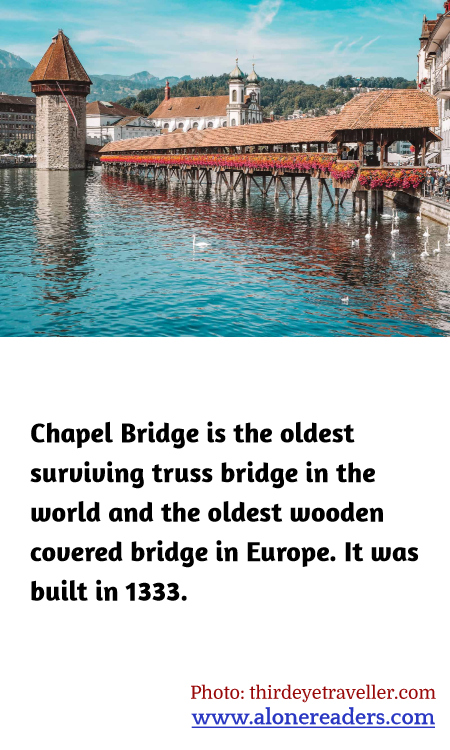
Chapel Bridge, known locally as Kapellbrücke, holds a pivotal position in the historical and architectural heritage of Lucerne, Switzerland. Constructed in 1333, it is revered as the oldest surviving truss bridge in the world and the oldest wooden covered bridge in Europe, making it a significant landmark not just in Switzerland but also globally. Spanning the Reuss River, this iconic structure was originally built for the dual purpose of connecting the old town with the new part of the city on the other side of the river, and also serving as part of Lucerne’s fortifications.
The bridge is easily recognizable by its unique design and the historical paintings that line its interior. These paintings, created in the 17th century by local Catholic painter Hans Heinrich Wägmann, depict scenes from Lucerne’s history and the lives of the city's patron saints, Leodegar and Maurice. Although many of these precious artworks were lost in a devastating fire in 1993, which also damaged much of the bridge itself, restoration efforts have managed to preserve the essence and historical value of this structure.
Moreover, adjacent to the bridge stands the Water Tower, an octagonal structure which predates the bridge and has served various functions over the centuries, from a prison and torture chamber to a municipal archive. Today, it is one of the most photographed historical sites in Switzerland. The combination of the Chapel Bridge and the Water Tower creates a picturesque scene that symbolizes Lucerne and is a major draw for tourists from around the world.
In the realm of engineering, the Chapel Bridge is a significant example of medieval timber construction techniques, showcasing the ingenuity of architects and builders from centuries past. It employs a series of trusses made of wood, a material that was readily available and widely used in Europe during the medieval period. The bridge's survival through the centuries—withstanding the elements and the 1993 fire—underscores its remarkable construction and the effectiveness of the restoration efforts that followed.
Chapel Bridge is not only a functional piece of architecture but also a testament to the historical and cultural fabric of Lucerne. It continues to be a focal point for cultural events and a bridge that carries pedestrians across its planks, just as it did nearly seven centuries ago. Its architectural beauty, coupled with its historical significance, ensures that Chapel Bridge remains a cherished landmark, symbolizing the resilience and enduring charm of Lucerne. Visitors are often captivated by its story and the panoramic views it offers of the cityscape, making it a must-visit destination in the heart of Switzerland.
