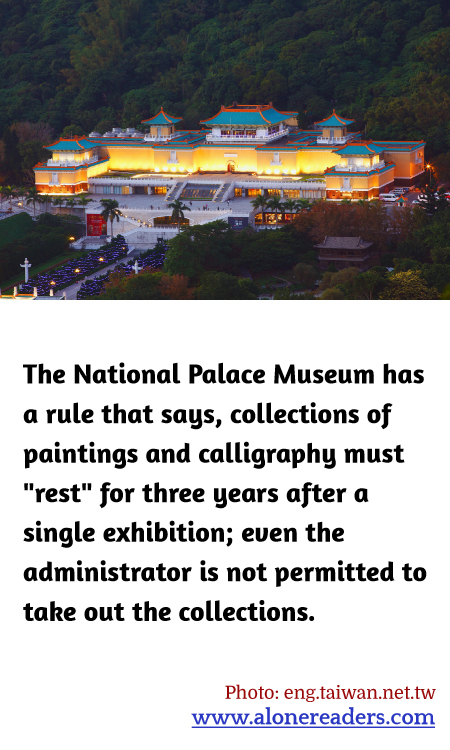
The National Palace Museum, one of the most revered institutions for Chinese art and culture, houses an extensive collection of artifacts that represent thousands of years of Chinese history. This includes a vast array of paintings and calligraphy, widely celebrated for their historical value and beauty. However, not many are aware of the stringent preservation rules that govern these delicate artworks.
One of the most striking rules at the National Palace Museum is that any piece of painting or calligraphy must undergo a "rest" period of three years after being exhibited just once. This means that once an artwork is displayed, it cannot be shown again for another three years. This rule is so strictly enforced that not even the museum's administrator has the authority to bypass it and remove items from storage for display or examination during this rest period.
The rationale behind this strict rule is primarily concerned with conservation. Paintings and calligraphic works are particularly susceptible to light, humidity, and temperature changes. Prolonged exposure to light can fade the pigments used in these artworks, and fluctuations in humidity and temperature can cause the paper or silk to become brittle, leading to damage. By enforcing a rest period, the museum minimizes exposure to these risk factors, thereby extending the lifespan of these precious items.
Furthermore, this rule not only protects the physical condition of the artworks but also their cultural value. By limiting exposure, the museum ensures that future generations will have the opportunity to experience these historical treasures in conditions as close as possible to their original state.
Critics might argue that such restrictions reduce the public's ability to appreciate these works, but the museum maintains that the preservation of these artifacts takes precedence. It balances public accessibility with conservation priorities by rotating exhibits and using high-quality reproductions in interim periods.
The strict preservation practice at the National Palace Museum highlights the challenges that come with housing such an invaluable collection. It also underscores a commitment to stewardship of cultural heritage that transcends immediate public access, ensuring that these works can be studied and appreciated for centuries to come. This conservation ethic serves as a model for museums worldwide, showcasing the delicate balance between access and preservation.
