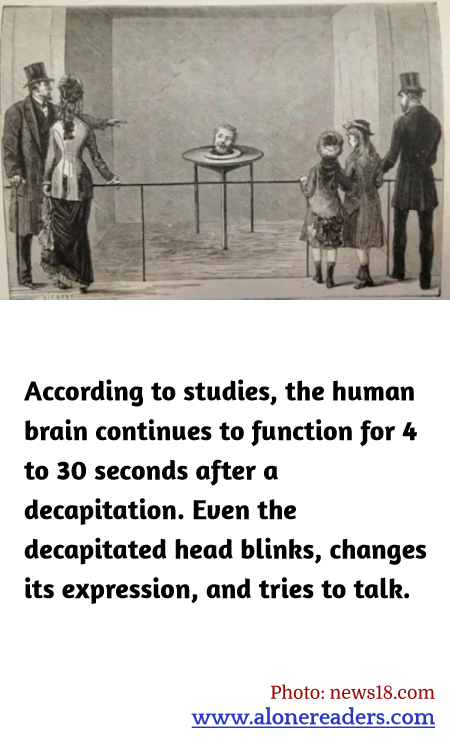
The notion that the human brain can continue functioning for several seconds after decapitation raises complex and intriguing questions about consciousness and the physical limits of brain activity. Research and anecdotal evidence suggest that post-decapitation, there may be a brief period where the brain remains active. During this time, ranging anywhere from 4 to 30 seconds, some physiological responses remain observable, such as blinking, facial movements, and possibly attempts to form words.
This phenomenon can be partially explained by the residual oxygen and nutrients that remain in the brain even after the head is severed from the body. Neurons, the cells responsible for brain activity, do not immediately die when blood flow stops; they can survive for a short period until the reserves are depleted. During this window, some reflex actions may occur. For example, blinking and facial expressions can be reflexive responses to sudden stimuli or changes in the environment.
The idea of a decapitated head attempting to speak might sound like something from a horror story, but it is grounded in some biological reality. While it is highly unlikely that coherent words could be formed due to the loss of the lungs and vocal cords needed to produce sound, some mouth movements could resemble attempts to speak or respond. These movements, however, are likely involuntary muscle spasms rather than deliberate actions.
From a historical and scientific perspective, these observations have been recorded but rarely studied under controlled conditions for obvious ethical reasons. Most of the accounts come from the era of public executions in the 18th and 19th centuries, with observers at guillotine executions reporting movements in the faces and eyes of the decapitated heads. Such reports have often been the subject of skepticism but persist as a haunting footnote in the annals of medical and criminal history.
The study of such phenomena touches on deeper questions about the cessation of life and what exactly defines the moment of death — whether it is when the heart stops, the brain ceases activity, or some other metric. Modern medicine defines death more commonly as the point at which brain activity is no longer detectable. Nonetheless, the brief post-decapitation activity suggests a surprising resilience of the human brain, albeit for a fleeting few seconds, challenging our understanding of life's final boundary.
