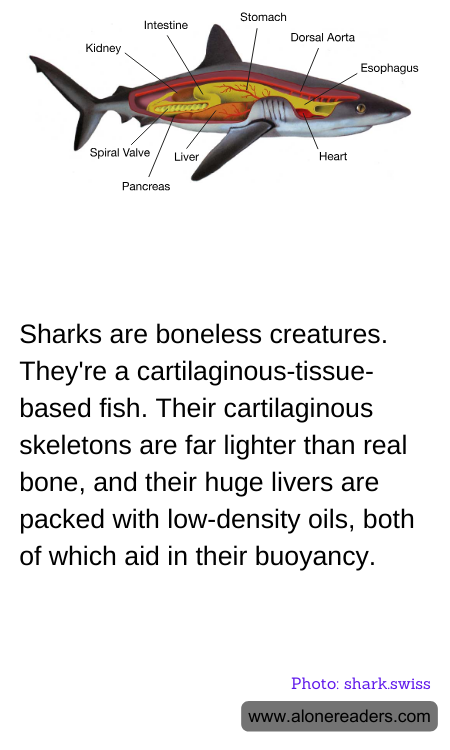
Sharks, some of the ocean's most distinguished predators, are remarkable not just for their fierce hunting abilities but also for their unique anatomical structure. Unlike most other fish species that possess skeletons made of hard bone, sharks are built almost entirely of a flexible substance known as cartilage. This is the same material that you feel in the tip of your nose and ears. This cartilaginous composition makes sharks lighter and more flexible, providing them with an evolutionary advantage as apex predators.
The lightness of cartilage, compared to bone, is advantageous in many ways. It allows sharks to be incredibly buoyant despite their large sizes. This buoyancy is further enhanced by sharks' livers, which are enormous compared to those of other fish and filled with oils and fats. These oils are less dense than water, contributing notably to the ability of the shark to float and maneuver through water with less energy expenditure. This physical setup is ideal for an animal that may travel long distances in search of food or during migratory patterns.
Sharks' cartilaginous skeletons also contribute to their hunting prowess. The flexibility afforded by cartilage allows for impressive bursts of speed and swift, twisting turns that bony fish cannot replicate. This agility is crucial when chasing swift or nimble prey through the water. Furthermore, cartilage does not fossilize as well as bone, which means much of what we understand about prehistoric sharks comes from preserved teeth rather than skeletons, indicating a long evolutionary history of these cartilage-based creatures.
However, being made of cartilage does have its drawbacks. It gives less protection than bone, making sharks' internal organs highly vulnerable to impacts. In response, sharks have evolved other protective adaptations, such as tough, scale-covered skin that reduces injury and decreases drag while swimming.
Overall, the structural makeup of sharks is a fascinating example of evolutionary adaptation, enabling them to dominate marine ecosystems as top predators. Their unique cartilaginous bodies not only facilitate their agility and buoyancy but also highlight the incredible diversity of life forms and how anatomical differences can drive ecological roles and behaviors in the animal kingdom.
