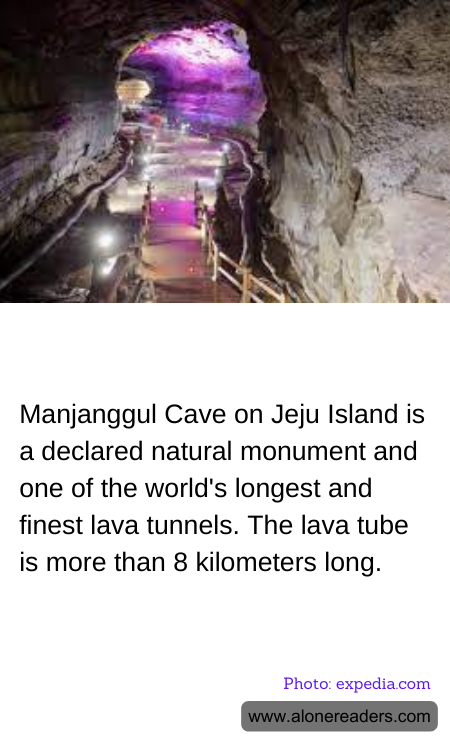
Manjanggul Cave, located on Jeju Island in South Korea, is one of the most impressive natural wonders in the region and is recognized as one of the longest lava tubes in the world. This geological phenomenon is more than 8 kilometers long, but only a portion of it is open to the public, offering a glimpse into a subterranean world formed by volcanic activity thousands of years ago.
Declared a natural monument, Manjanggul Cave is a prime example of a well-preserved lava tunnel. It was created by cooling lava that continued to flow beneath its hardened surface, carving extensive corridors and caverns. As visitors walk through the tunnel, they encounter a variety of interesting volcanic formations including stalactites, stalagmites, and the cave's signature feature, lava columns. Perhaps the most famous of these is a massive lava column that stands at 7.6 meters high, believed to be one of the tallest in the world.
The environment inside Manjanggul is markedly different from the lush landscapes typical of Jeju Island, presenting a stark, almost lunar surface that contrasts sharply with the island’s green mountains and clear blue waters. The temperature inside the cave remains relatively consistent, offering a cool escape from the outside weather, but also requires visitors to bring warm clothing even during the summer months.
The scientific value of Manjanggul Cave is immense. Researchers study the cave to better understand volcanic activity and the geological processes that shape our planet. Additionally, the cave supports a unique ecosystem, including some species that have adapted specifically to the cave’s dark, isolated environment. This biological aspect makes it not only a site of geological interest but also of ecological importance.
Tourists visiting Manjanggul Cave should prepare for a somewhat rugged experience, as the walking path can be wet and uneven. Despite these challenges, the journey through this dramatic, ancient lava tunnel is a captivating experience, offering both awe-inspiring sights and a deeper appreciation for the natural forces that continue to shape the Earth. The cave is a testament to the dynamic and ever-changing nature of our planet and serves as a reminder of the powerful, creative, and destructive forces of Earth’s geology. Hence, Manjanggul Cave on Jeju Island stands as a splendid example of natural history and a must-visit for those intrigued by the natural world.
