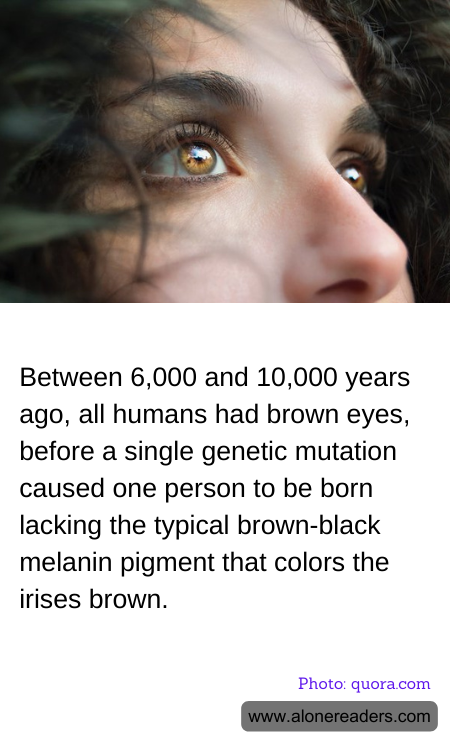
The journey of human eye color variation is a fascinating tale of genetic mutation and evolution. Between 6,000 and 10,000 years ago, the genetic landscape of human eye color began to change due to a single mutation in a gene known as OCA2. This gene is primarily responsible for the production and regulation of melanin, the pigment that gives color to the eyes, hair, and skin. Originally, all humans had brown eyes, which is suggestive of the dominance of high melanin production.
The mutation occurred in the regulatory region adjacent to the OCA2 gene, rather than in the gene itself—a mutation now referred to as the HERC2 gene mutation. This mutation reduced the OCA2 gene's ability to produce melanin in the irises, leading to less pigmentation and the appearance of blue eyes. Although the exact timing and location of this mutation remain subjects of research, many scientists believe it first appeared in individuals near the Black Sea region.
This singular evolutionary event illustrates how a small genetic tweak can have a widespread impact on human phenotypic diversity. The original blue-eyed individual would have carried a recessive trait, meaning that if they reproduced with someone who had brown eyes, the dominant trait, their offspring were likely to have brown eyes. However, as more people inherited this mutation, the chances increased for blue-eyed individuals to meet and reproduce, thereby spreading the gene throughout human populations.
Subsequently, as humans migrated and populations mixed, more variations in eye color appeared, including green, hazel, and grey. This diversity is largely due to the interactions of multiple genes, each contributing to the spectrum of eye color we see in human populations today.
From an evolutionary standpoint, the spread of the blue eye color mutation is also a compelling example of genetic drift, a mechanism of evolution based on random changes in gene frequencies within a population. Some research suggests that the eye color variation may have had a selective advantage or was simply neutral but became widespread through founder effects as small groups of humans migrated and settled in different parts of the world.
Today, eye color remains a key example of Mendelian genetics in biology education, showcasing how traits are inherited and how mutations can lead to lasting changes in populations. The story of how blue eyes spread exemplifies the broader narrative of human diversity and adaptation.
