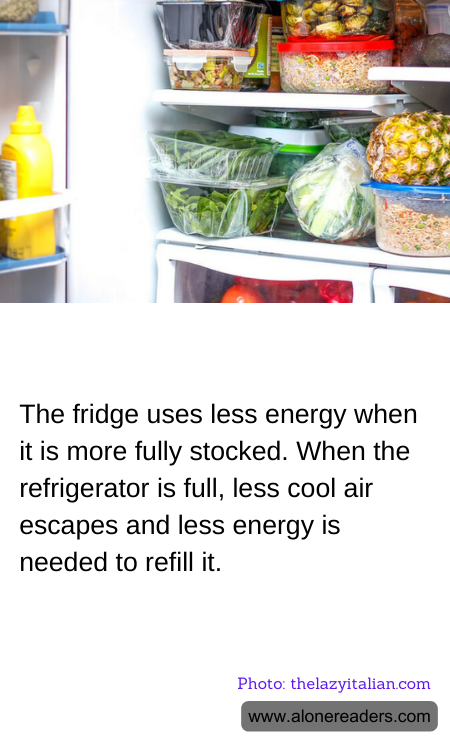
Keeping your refrigerator well-stocked can surprisingly contribute to better energy efficiency. An empty fridge means more air space that needs to be cooled. When you open the door, this cool air escapes and is replaced by warmer air from the room, which the fridge then needs to cool down. Conversely, a fridge full of items doesn't lose as much cold air when opened because the items inside absorb and retain the cold. Hence, less energy is required to restore the interior temperature.
It’s important to note that "full" does not mean overcrowded. Air must circulate around the items in your refrigerator to keep them cool consistently. A well-organized and moderately stocked fridge will ensure efficient air circulation while maintaining energy efficiency. Packing items too tightly could block vents, restricting airflow and causing the appliance to work harder, which could actually increase your energy usage.
Furthermore, the type of content in your fridge also matters. Items that retain cold better, such as beverages and meats, can help maintain low temperatures. This allows the fridge to operate more efficiently as opposed to being filled with items that warm up quickly. Additionally, consider the size of the fridge relative to your needs. A larger fridge not only consumes more energy at baseline but also takes more items to fill. Thus, choosing a model size that matches your usual grocery habits can aid in maintaining energy efficiency.
Periodically checking to ensure the seals on the fridge door are tight and the thermostat is set correctly can also prevent excess energy use. Tips like allowing hot food to cool before placing it in the fridge can also contribute to decreased energy consumption as the appliance won't need to work as hard to cool down the hot food.
In conclusion, a well-stocked fridge can indeed save energy, but it needs to be done wisely. Effective fridge management ensures that you're not only saving on energy costs but also contributing to the longer lifespan of your appliance by not overworking it. Balancing the quantity and type of items stored, ensuring proper air circulation, and regular maintenance will provide best practices for energy efficiency in refrigerator use.
