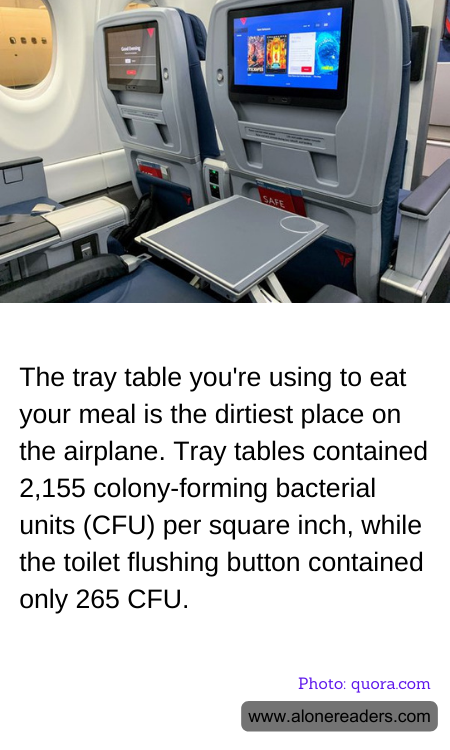
When flying, many travelers worry about the germs lurking in bathrooms or around crowded spaces. However, one of the most contaminated spots is right in front of your seat: the tray table. Surprisingly, research has shown that these fold-down little tables where passengers eat, work, and sometimes rest, are a hotbed for bacteria. A study revealed that tray tables harbor an astonishing 2,155 colony-forming units (CFU) per square inch. This figure is significantly higher than many other surfaces on the airplane, including the toilet flush button, which only has about 265 CFU per square inch.
This stark contrast in bacterial counts may come as a shock to many, considering the toilet flush is directly contacted by numerous people with potentially unclean hands and is generally assumed to be one of the germiest places in any public setting. The reason tray tables surpass even bathrooms in bacteria levels could be due to the frequency and variety of uses combined with less frequent sanitization. Tray tables are used for everything from a dining surface to a support for electronic devices and even as a pillow for napping passengers, making them prone to picking up and hosting germs from various sources.
To combat this, it’s advisable for passengers to take proactive measures to ensure their personal space is as clean as possible. Using disinfectant wipes to clean off the tray table at the start of your flight is a simple and effective way to reduce the risk of encountering harmful bacteria. Hand sanitizers or washes can also be beneficial after using the table and before eating any food.
Airlines are also recognizing the importance of keeping these surfaces clean as a part of enhancing overall flight hygiene. Some have increased their cleaning protocols, implementing more thorough cleanings between flights and using stronger, more effective disinfecting solutions.
Understanding where germs are most likely to be found on planes can help passengers better prepare for their journeys, making flying a healthier and more comfortable experience. Maintaining personal hygiene and cleanliness in one’s immediate area can significantly minimize the risk of illness, allowing for a safer travel environment for everyone aboard.
