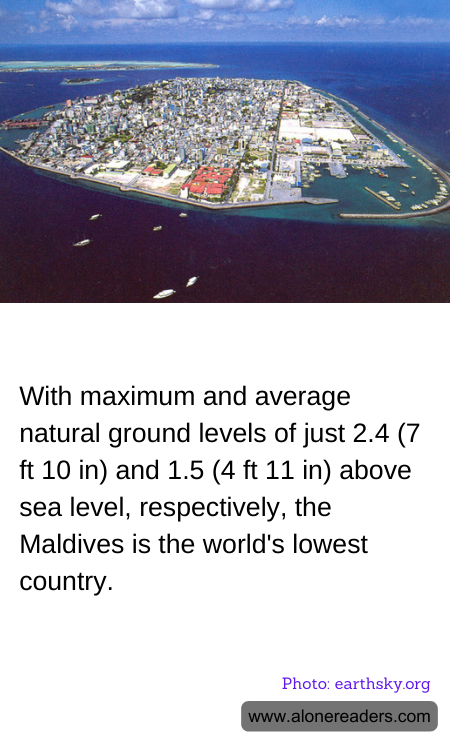
The Maldives holds a breathtaking yet sobering distinction as the world's lowest country. Consisting of 26 atolls and over 1,000 coral islands, the nation is strategically dispersed in the Indian Ocean, boasting picturesque vistas and abundant marine life, which make it a top destination for tourists worldwide. However, the very charm that attracts countless visitors also underscores a looming environmental challenge—its vulnerability to rising sea levels caused by climate change.
The average elevation of the Maldives is only about 1.5 meters (4 feet 11 inches) above sea level, with the highest natural point being a mere 2.4 meters (7 feet 10 inches). These startling statistics position the Maldives at the forefront of the climate impact discourse. The low elevation of the islands makes them acutely susceptible to the effects of sea-level rise, which poses a serious threat not only to its ecosystems but also to its very existence. The inundation of saltwater can devastate freshwater lenses and arable land, crucial for the local agriculture and drinking supplies, thereby affecting food security and access to fresh water.
The government of the Maldives and international environmental organizations are actively pursuing strategies to combat these threats. Measures such as constructing sea walls, promoting coral reef restoration to buffer against storm surges, and implementing stringent regulations to protect the natural environment are ongoing. Moreover, the Maldives advocates strongly for global climate action, often using its precarious position to highlight the urgent need for international cooperation in combating climate change.
Despite the ominous challenges posed by its geographical disposition, the Maldives remains resilient. Innovations in sustainable tourism, renewable energy adoption, and disaster preparedness are continually being explored and implemented. Additionally, the idea of relocating populations from the riskiest areas to more sustainable environments is being considered as a last resort, reflecting the critical stage of adaptation strategies in response to rising sea levels.
From a broader perspective, the situation in the Maldives serves as a crucial case study for global environmental policy and underscores the immediate impact of environmental degradation on small island developing states (SIDS). It starkly highlights the dire need for comprehensive and sustained efforts to address the cascading effects of climate change globally. In this context, the fate of the Maldives intertwines with the broader, urgent challenges of sustainability and environmental stewardship that the world faces today.
