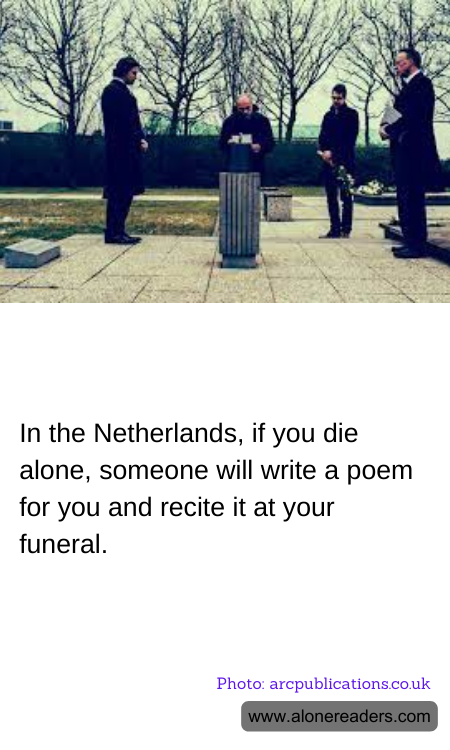
In the picturesque landscapes of the Netherlands, a touching tradition silently honors those who depart this life without companions by their side. Recognized informally as 'the poet of the unclaimed,' this role involves a volunteer, often a poet, who steps into the gentle space between life and death to give voice to those who have none left to speak for them.
When an individual dies alone, with no known relatives or friends to bid farewell, it is customary in various municipalities across the Netherlands for a local poet to write a poem specifically for the deceased. This practice brings dignity and a sense of care to the final farewell of those who might otherwise have passed quietly and unnoticed. The poems are not just elegies but are crafted as meaningful tributes based on whatever fragments of life stories can be gathered, sometimes from the belongings of the deceased or the circumstances of their lives.
The recital of these poems during the funeral, often held with minimal attendance, transforms the ceremony. What would typically be a solemn and stark affair becomes a poignant, personalized send-off. This unique honor ensures that each individual, regardless of their social connections at life's end, is acknowledged and remembered, if only by a few, in a deeply human way.
This tradition underscores a broader societal respect for life and death that pervades Dutch culture. It manifests an understanding that every life has value and deserves recognition, even in death. The role of the poet in these moments is not just as a creator of verse but as a medium through which the community extends a final gesture of inclusivity and respect. The act of crafting and delivering a poem under such circumstances is both an artistic expression and a public service, symbolizing a society's collective memory and compassion.
While this practice might seem unusual, it beautifully exemplifies the inherent respect for human dignity that is cultivated in some cultures. The Netherlands' approach to honoring the loneliest of its citizens serves as a poignant reminder of the impact thoughtful gestures can have in affording grace and recognition to every individual, suggesting that in death, as in life, nobody is truly alone.
