When you think of Norwegian culture, you might envision stunning fjords, the northern lights, and perhaps the traditional attire of the Sami people. However, if you're planning a trip to Norway, one simple yet crucial cultural practice you should be aware of is dining etiquette, especially when it comes to the use of utensils. In Norway, as in many other European countries, mastering the use of a knife and fork is not just a matter of practicality but of etiquette.
In Norway, the norm is to always use a knife and fork while eating, and this extends to foods that many other cultures would typically eat with their hands, such as sandwiches. Observing this practice isn’t only about blending in or showing respect for local customs; it's also practical, keeping your hands clean and ready for a handshake or a greeting at any moment.
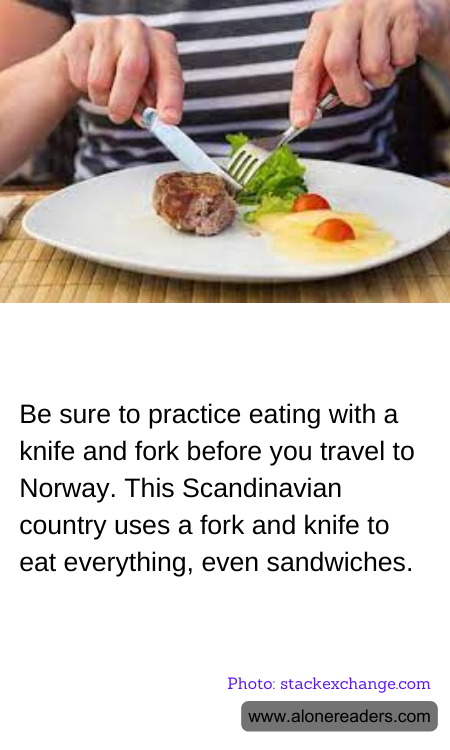
Norwegians pay special attention to how the knife and fork are held and used. The fork is held in the left hand and the knife in the right. After cutting, Norwegians will continue to eat with the fork still in the left hand, unlike in some cultures where diners might switch the fork to the right hand after cutting their food. This style is often referred to as 'European style' or 'Continental style' dining.
This etiquette extends to other dining habits as well. For example, it is commonplace for Norwegians to keep both hands above the table while eating. Resting elbows on the table, however, is considered impolite. Furthermore, you should try to eat all the food on your plate, as leaving large amounts of food may suggest that you did not enjoy your meal—a potentially disrespectful implication towards the host or chef.
There's also a ceremonial aspect to eating in Norway, especially during gatherings or special occasions, which typically begin with a toast (often with aquavit or beer), and end with everyone thanking the host for the meal. Jumping right in and eating before these formalities are observed can be seen as impolite.
For travelers who are not used to regularly dining with a knife and fork, this might require a bit of practice before your visit. However, taking the time to become familiar with these dining norms can greatly enhance your cultural experience in Norway. It shows respect for the local customs and can make your interactions with Norwegians smoother and more enjoyable. Plus, it's an interesting skill to bring back from your travels, a souvenir of manners and etiquette from the beautiful land of Norway.
