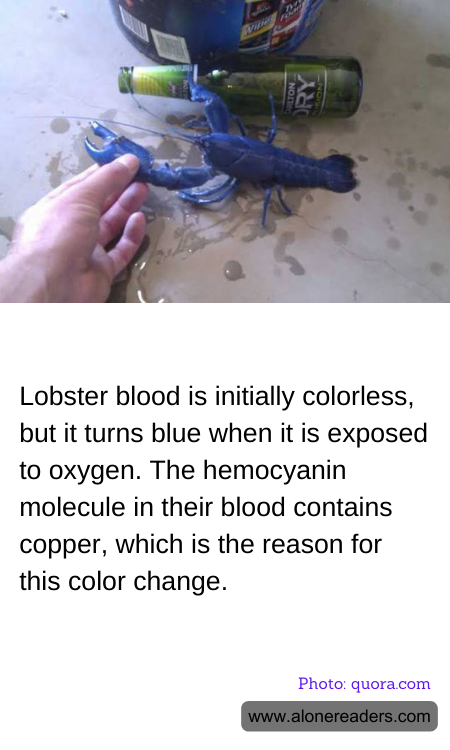
Lobster blood exhibits a fascinating characteristic: it is colorless when it circulates within the body, but turns a distinctive blue upon exposure to oxygen. This remarkable transformation is driven by the presence of a copper-containing molecule known as hemocyanin. Unlike human blood, which relies on iron-based hemoglobin to transport oxygen and imparts a red color, lobsters utilize hemocyanin for oxygen transport, giving their blood its unique blue hue when oxidized.
Hemocyanin operates differently from hemoglobin, binding oxygen molecules directly to copper ions instead of iron. This copper gives the blood its blue color, analogous to how the iron in our blood gives it a red color. Hemocyanin is more efficient in low-oxygen environments, which is beneficial for lobsters living at the bottom of the ocean.
The process is not only of interest from a biological standpoint, but also influences culinary practices. Lobsters are typically cooked alive or very shortly after death to prevent spoilage, during which the blue blood becomes colorless again. Moreover, the study of lobster blood has extended into medical research, exploring potential applications of hemocyanin in vaccines and as an antimicrobial agent due to its immune properties.
Thus, the blue blood of lobsters is a perfect representation of how unique adaptations help marine creatures survive in their specific habitats, while also opening new avenues for scientific research and applications that could benefit other fields.
