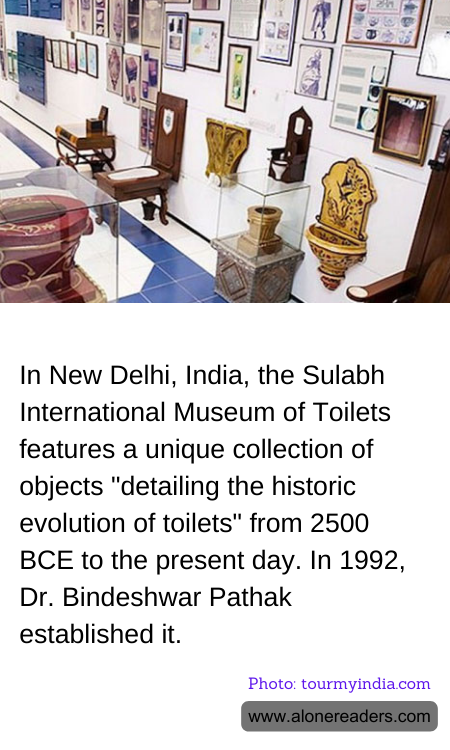
In the bustling heart of New Delhi, India, a unique museum offers a historical panorama that traces one of the most underrated elements of human civilization—the toilet. The Sulabh International Museum of Toileths, established in 1992 by Dr. Bindeshwar Pathak, is dedicated to the global history of sanitation and toilets. Its extensive collection provides an intriguing glimpse into the evolution of toilets from 2500 BCE to the present day.
The museum showcases a diverse range of toilets, from the ornate and extravagantly designed to the most functional and innovative. Visitors can expect to see everything from a replica of King Louis XIV’s throne-like commode, which he reputedly used to hold court while attending to bodily functions, to more contemporary and eco-friendly designs that address current environmental concerns. A highlight of the collection includes a detailed display of the toilet used on board the Space Shuttle, demonstrating how astronauts manage sanitation in space.
But the Sulabh International is more than just a collection of curious commodes. It serves a dual purpose by educating the public about the ongoing issues related to sanitation across the globe. Dr. Pathak, who is also the founder of Sulabh Sanitation and Social Reform Movement, has tirelessly worked to promote hygiene and proper sanitation in India, a country where millions still lack access to basic toilet facilities. The museum juxtaposes historical luxury with the stark reality of present-day sanitation crises in many parts of the world.
Through exhibits, the museum also conveys the cultural attitudes and advancements in technology affecting the design and function of toilets. For instance, visitors can learn how ancient Roman public toilets promoted socializing, or the way Victorian morality influenced the designs of discreet and decorated toilet fixtures.
Educational programs and guided tours offered by the museum provide insights into how significant the advancement of toilet technology has been to public health and urban planning. The museum also emphasizes the link between proper sanitation and the dignity, safety, and empowerment of vulnerable populations, particularly women and girls.
In essence, the Sulabh International Museum of Toilets not only offers a quirky journey through the history of human waste management but also reflects on a crucial aspect of public health that continues to impact billions of lives around the world. Its existence underscores the importance of continued innovation and advocacy in the realm of sanitation to ensure a healthy, sustainable future for all.
