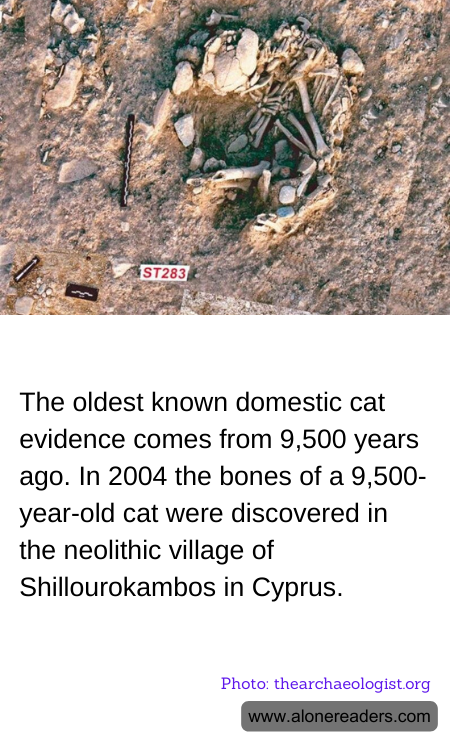
The domestication of cats is a fascinating chapter in human history, blending myth, archeology, and science to trace the journey of these enigmatic creatures from wild hunters to beloved companions. The discovery in 2004 of the bones of a 9,500-year-old cat in the Neolithic village of Shillourokambos on the Mediterranean island of Cyprus provides remarkable insight into this journey. This find is significant as it predates previous evidence of domesticated cats by several millennia and offers a unique glimpse into the lives of our ancestors and their relationships with animals.
Before this discovery, the earliest known evidence of human-cat interactions dated back approximately 4,000 years to Ancient Egypt, where cats were revered, mummified, and even worshipped as divine incarnations. However, the Shillourokambos cat suggests that the bond between humans and felines was established much earlier. What makes this discovery particularly astonishing is that Cyprus, an island, had no native populations of cats. Thus, the presence of a cat there strongly indicates that humans brought domesticated or semi-domesticated cats with them from the mainland.
This finding aligns with the theory that cats essentially domesticated themselves by adapting to human environments. Initially drawn by the abundance of prey in human settlements, these opportunist animals gradually became accustomed to human presence. Over time, a symbiotic relationship developed: cats helped to control pests, and humans provided a steady food source. This mutually beneficial arrangement paved the way for cats to integrate more deeply into human communities.
The cat discovered in Cyprus was buried with its human owner, suggesting an emotional or spiritual connection, rather than purely practical human-animal dynamics. Such early evidence of a burial ceremony indicates a level of respect and perhaps even affection towards the cat, hinting at the beginnings of a deeper, more personal relationship between humans and cats that would evolve into the domestic partnership observed today.
In examining such ancient interactions between humans and cats, researchers provide us with more than just historical data. They offer insights into the complexities of human-animal relationships and the ways in which these relationships have shaped both species over millennia. The discovery at Shillourokambos serves as a poignant reminder of the ancient roots of our modern-day bond with domestic cats, tracing back through thousands of years of shared history and evolving companionship.
