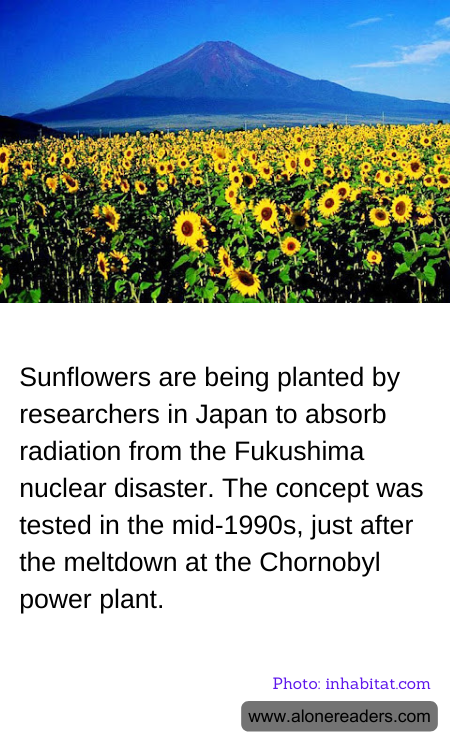
After the 2011 earthquake and tsunami led to a nuclear disaster at Fukushima, Japan faced an urgent need to find effective and environmentally friendly cleanup solutions. This led to the innovative approach of using sunflowers, a method initially tested after the 1986 Chornobyl disaster. Scientists observed that sunflowers can absorb cesium-137 and strontium-90 from the soil through a process known as phytoremediation. Phytoremediation is a cost-effective plant-based approach to decontaminating soil, making it an ideal method for rehabilitating large areas without the need for invasive procedures like digging up contaminated soil and transporting it to disposal facilities.
Researchers in Japan, inspired by the reports of successful use of sunflowers in Chornobiyl during the 1990s, began planting tens of thousands of sunflowers across the areas affected by the Fukushima meltdown. Not only do these plants help remove harmful radioactive elements from the soil, but they also convert a bleak visual reminder of nuclear disaster into landscapes overflowing with vibrant life. This reclamation of land through natural means not only cleanses the environment but also helps revitalize the spirit and economy of the affected communities, providing hope and a sense of renewal.
The science behind this method involves the sunflowers drawing out radioactive isotopes from the soil into their roots and stems as they grow. This process, while slow, is a significant step in returning the land to a safer, more usable state without further damaging the environment. Once fully grown, the radioactive plants are harvested and disposed of securely, preventing the reintroduction of radionuclides into the ecosystem.
Sunflower planting projects also engage local communities, who participate in the sowing and maintenance of the flowers, thus rekindling a bond with their environment and empowering them towards recovery. However, while effective to a certain extent, it’s recognized that phytoremediation is part of a longer-term environmental strategy. It needs to be complemented by additional remediation efforts and continuous monitoring to measure recovery progress and ensure community safety.
In conclusion, the use of sunflowers to absorb radiation in Japan is a poignant example of how nature can be harnessed to heal itself. This method showcases an inspiring blend of science and community cooperation in the face of environmental crisis and stands as a testament to human ingenuity in sustainable environmental management.
