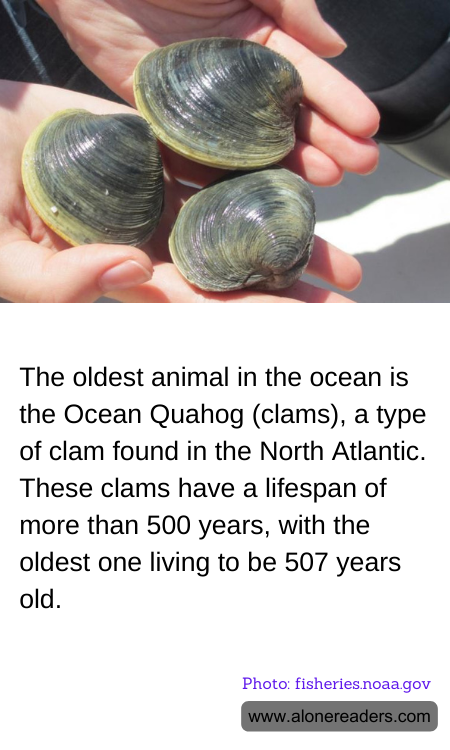
The ocean is home to a multitude of creatures, each with its unique lifespan and survival strategies, but none quite compare to the remarkable longevity of the Ocean Quahog (Arctica islandica). This species of clam, which thrives in the chilly depths of the North Atlantic Ocean, is known for its exceptionally long life. The Ocean Quahog's lifespan far exceeds that of many other marine species, with individuals living for centuries, and the oldest recorded at an astounding 507 years old.
The secret to the longevity of the Ocean Quahog lies in its slow growth rate and the relatively stable environment of the deep ocean floor where it resides. These clams have a minimal metabolic rate, which scientists believe contributes to their extended lifespans. The age of these clams was a significant mystery until fairly recently, when researchers began using more refined methods to estimate age, such as counting the growth rings on their shells. These rings, much like those of a tree, offer a reliable measure of age, albeit requiring careful microscopic examination due to their compactness and complexity.
The discovery of such longevity in a seemingly simple organism has intrigued scientists and raised questions about the genetic and physiological factors that contribute to life extension. Research into the Ocean Quahog’s biology not only helps us understand the ecosystem of the ocean floor but also offers insights into the mechanisms of aging. Studies have suggested that these clams have developed unique adaptations to protect themselves against the damages of aging, such as diseases and deteriorating cellular function.
Moreover, the existence of such an ancient creature offers a unique window into the past, providing clues about the historical conditions of their marine environments over the centuries. Conservation of their habitats is essential, not just for the survival of this species, but also for the maintenance of the historical records stored within their shells.
The Ocean Quahog serves as a remarkable example of biological endurance and highlights the diversity and complexity of ocean life. It reminds us of the resilience of nature and underlines the importance of continuing to study and protect our world’s oceans. As research continues, the Ocean Quahog could one day help unravel the mysteries of longevity, possibly offering lessons that could apply even to human aging and medical science.
