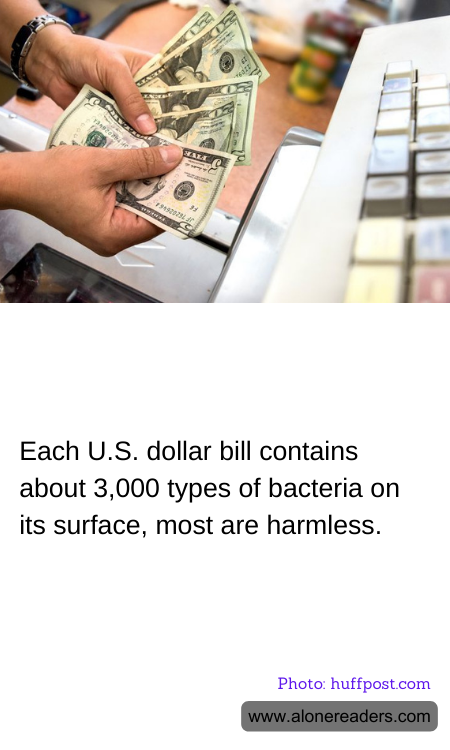
Money changes hands constantly, providing a breeding ground for myriad bacteria. An intriguing study reveals that each U.S. dollar bill carries about 3,000 different types of bacteria on its surface. Despite the initial concern this figure might raise, the good news is that most of these bacteria are harmless to humans.
This plethora of bacteria thrives due to the very nature of paper money. U.S. dollar bills are made from a blend of cotton and linen, which provides a fibrous surface ideal for bacteria to cling to and grow. Moreover, the frequent exchange of bills between countless individuals increases the diversity of microbial residents. The environment, the hands that handle the money, and even the oils and residue from our skin contribute to the microbial population on each bill.
Interestingly, the types of bacteria found can vary widely. Studies using genomic analysis have identified not only common skin bacteria like Propionibacterium acnes and Staphylococcus epidermidis but also traces of DNA from pets, viruses, and even drug-resistant pathogens. However, these are generally not in sufficient quantities to pose health concerns under typical circumstances.
Furthermore, the implications of such bacterial diversity go beyond just health aspects; they could also provide interesting data for forensics and epidemiology. For example, scientists can potentially track the movement of bills and thereby follow the spread of diseases, or understand patterns of antibiotic resistance.
Despite the vast number of bacteria present on dollar bills, the everyday handling of money should not be cause for alarm. Standard hygiene practices like washing hands regularly, especially after handling money and before eating or touching the face, are generally sufficient to prevent any potential bacterial transfer from bills. Meanwhile, the fascinating world of microorganisms continues to thrive quietly on the currency that passes through our hands every day.
