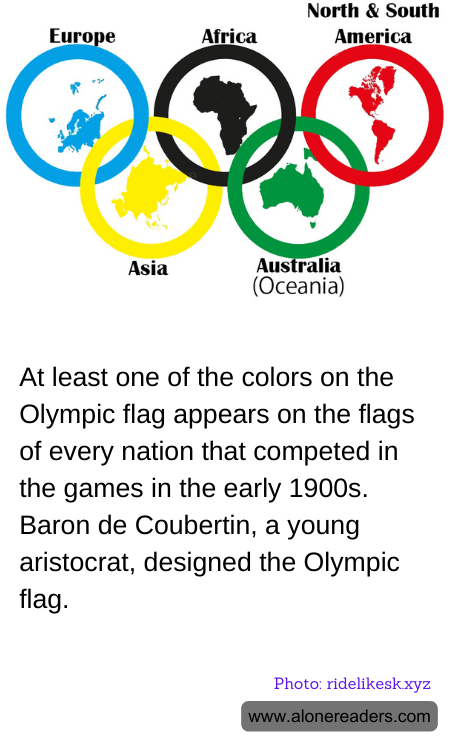
The iconic Olympic flag, recognized worldwide for its five interlocking rings on a white background, symbolizes unity and the coming together of athletes from across the globe. The flag was designed by Pierre de Coubertin, a French aristocrat and the founder of the modern Olympic Games, embodying his vision for a global sporting event that transcends political and cultural boundaries.
Coubertin unveiled the flag in 1914, with colors that were particularly significant: blue, yellow, black, green, and red, alongside the white of the background. Intriguingly, Coubertin chose these colors because at least one of them appeared in the flag of every country that participated in the Olympics at that time. This color choice was a thoughtful representation of inclusivity and universality, aiming to reflect the international nature of the Games.
The design of the rings themselves also holds meaning. The five interlocked rings represent the five inhabited continents of the world - Africa, the Americas, Asia, Europe, and Oceania. This interconnectedness symbolizes the world coming together through the Olympic Games, promoting peaceful competition and mutual understanding among diverse cultures and nations.
The Olympic flag not only adds a meaningful visual element to the Games but also serves as a powerful reminder of the ideals that the Olympics strive to uphold: unity, friendship, and the spirit of competition. Every time the flag is raised, it reinforces the message that sports can indeed bridge differences and foster a global community.
