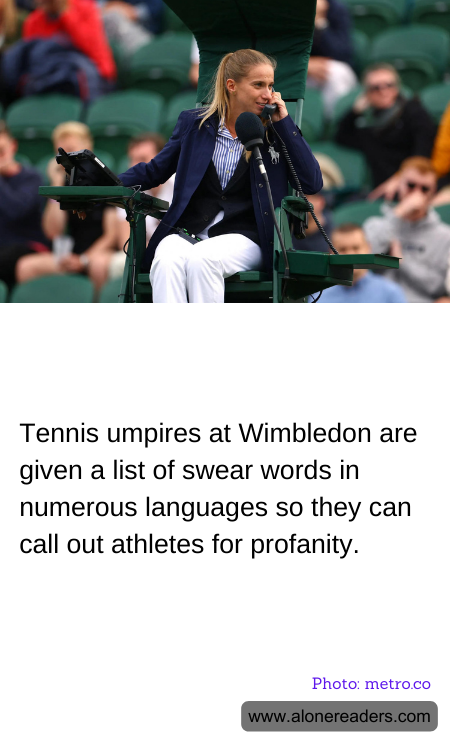
At the prestigious Wimbledon Championships, maintaining decorum and sportsmanship is paramount. In this tournament steeped in tradition, even the language used on court is diligently monitored. Interestingly, tennis umpires at Wimbledon are equipped with a rather unique tool to uphold this standard: a list of swear words in various languages. This preparation is in response to the global nature of the competition, which attracts players—and their languages—from around the world.
The purpose of the swear word list is to help umpires identify when players violate the code of conduct by using profanity during matches. Tennis, like many sports, is emotionally charged, and players often express their frustration vocally. While outbursts in a commonly understood language can be easily spotted, detecting swear words across different languages presents more of a challenge. The list includes commonly used offensive words and phrases from a wide array of languages, enabling umpires to effectively monitor athletes regardless of their linguistic background.
This approach underscores the level of professionalism and fairness expected at Wimbledon. The use of such a list ensures that all players, regardless of nationality, are held to the same standards of conduct. It also depicts the lengths to which the organizers go to preserve the sanctity and respectability of the tournament. Moreover, it operates under the principles of equality—no player is unfairly advantaged or disadvantaged based on their language, making the matches as fair as possible.
However, this method also raises interesting questions about cultural sensitivity and the subjective interpretations of what constitutes profanity across different cultures. Words that are considered highly offensive in one language might be benign in another. Thus, umpires must be judicious in their application of rules regarding language use, equipped not only with the list but also with a sense of cultural context and understanding.
In conclusion, Wimbledon’s use of a swear word list for its umpires is a testament to its commitment to fairness, professionalism, and respect. By preparing umpires to understand and act upon infractions in any language, Wimbledon ensures that the spirit of the game is preserved, making the historic tournament a beacon of cultural respect and sportsmanship in the competitive world of tennis.
