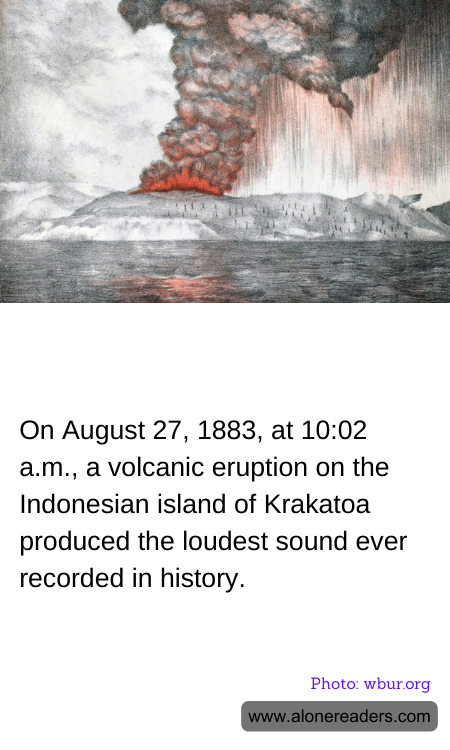
On August 27, 1883, the world was witness to one of the most catastrophic natural events in recorded history, the eruption of Krakatoa, located in the Sunda Strait between the islands of Java and Sumatra in Indonesia. The climax of the event occurred at 10:02 a.m., marking a cataclysm of unfathomable scale, as the earth shook and skies darkened from the colossal amount of volcanic ash ejected into the atmosphere.
Krakatoa's eruption was phenomenally powerful, culminating in a series of explosive events that were heard as far away as Perth in Western Australia, some 1,930 miles away, and the island of Rodrigues near Mauritius, approximately 3,000 miles distant. This eruption is often cited as the loudest sound recorded in human history. The blast was so potent it ruptured the eardrums of sailors on ships that were over 40 miles away and created shockwaves that circled the globe several times.
The aftermath of the eruption was as tragic as the event itself. The volcanic activity triggered immense tsunamis, with waves reportedly reaching heights of over 100 feet, devastating nearby coastal towns and villages. It is estimated that over 36,000 people lost their lives due to the tsunamis and the subsequent calamities caused by the eruption, including widespread destruction and famine.
The global climate was notably affected as well. The enormous volume of volcanic ash propelled into the upper atmosphere led to spectacular sunsets and a measurable drop in global temperatures in the following year. This phenomenon, known as "volcanic winter," occurred because the ash and sulfur dioxide released during the eruption formed a layer in the atmosphere that significantly reduced solar radiation.
The catastrophic eruption of Krakatoa has since been a topic of study and fascination, highlighting not only the formidable power of nature but also advancing our understanding of volcanic activity and its potential effects on climate and humanity. The event left an indelible mark on the planet and remains a potent reminder of the volatile nature of Earth's geology.
