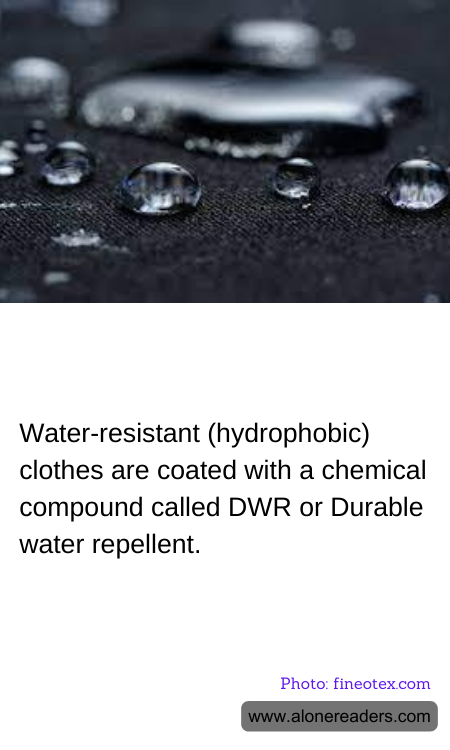
Water-resistant clothing has become increasingly popular among outdoor enthusiasts and in everyday fashion due to its practicality and comfort. One of the key technologies enabling this property is the application of Durable Water Repellent (DWR) coatings on the fabric. DWR is a chemical treatment that causes water to bead up and roll off the surface, rather than soaking into the fibers. This not only keeps the wearer dry but also helps maintain breathability, making garments treated with DWR ideal for active use in various weather conditions.
The DWR coating is usually applied to the outer layer of the fabric and works by increasing the surface tension so that water droplets cannot penetrate the fibers. Instead, they form beads and slide off. This treatment is commonly used on materials like nylon and polyester which, while inherently somewhat resistant to water absorption, benefit significantly from the additional DWR treatment for full effectiveness in repellent performance.
Despite its widespread use, the environmental impact of DWR treatments has been a concern. Traditional DWR coatings often contained perfluorinated compounds (PFCs), considered harmful to the environment and to human health. As awareness of these issues has grown, the textile industry has seen a shift towards more eco-friendly alternatives. These newer formulations aim to reduce environmental impact by eliminating PFCs and using more sustainable practices, all while maintaining or even improving the water-resistant properties of the garments.
For maintaining the water-resistant properties of these garments, regular care and reapplication of the DWR coating are necessary. Over time and with frequent use, the DWR treatment can wear off due to physical abrasion and exposure to detergents. Most outdoor clothing brands recommend specific cleaning products that are gentle on DWR coatings and even sell DWR renewal sprays or wash-in products to rejuvenate the garment’s water-resistant properties.
This advancement in textile technology allows for better protection against the elements, enabling outdoor enthusiasts to pursue their adventures regardless of wet conditions. Moreover, as technology and environmental practices evolve, we can expect further innovations that will continue to enhance the functionality and sustainability of outdoor and everyday wear.
